

“Ability is what you’re capable of doing. Motivation determines what you do. Attitude determines how well you do it.” – Lou Holtz.
Here, Lou Holtz perfectly illustrates the dynamics of a productive workplace. As a business owner, you can’t simply employ a team of top talents and then call it a day, expecting everything else to fall into place. Things don’t work that way. There’s a powerful, yet often overlooked step that transforms top abilities into top results. That powerful step is motivation!
Think of motivation as the fuel that keeps your workplace engine running smoothly. Without it, you’re basically trying to win a race with an empty gas tank good luck with that! It’s the difference between employees who resume to their desks feeling deflated and uninspired and those who come fully ready to fire on all cylinders!
But here’s the kicker: despite being a driving force for higher productivity, job satisfaction, and keeping talented people from updating their LinkedIn profiles, motivation often gets pushed to the back burner. Many companies spend more resources on team-building exercises but forget to keep their people genuinely excited about their work.
So, today, I’m going to talk about the importance of motivation in the workplace and how to improve employee motivation effectively!

Why is Motivation Important in the Workplace?
When employees are highly-motivated, magic happens. They don’t just do their jobs; they crush them. Motivated workers are more productive, creative, and resilient. They don’t just solve problems; they actively look for ways to improve things. Plus, they stick around longer (saving you from the dreaded revolving door of recruitment), and their enthusiasm is contagious in a good way.
But it’s not just about productivity motivated employees are happier employees. They’re more employee engagement, which means fewer “clockwatching until freedom” moments. Instead, they’ll give off the “I actually kind of love what I do” vibes. This leads to better team collaboration, improved customer service (because happy employees = happy customers), and an overall workplace atmosphere.
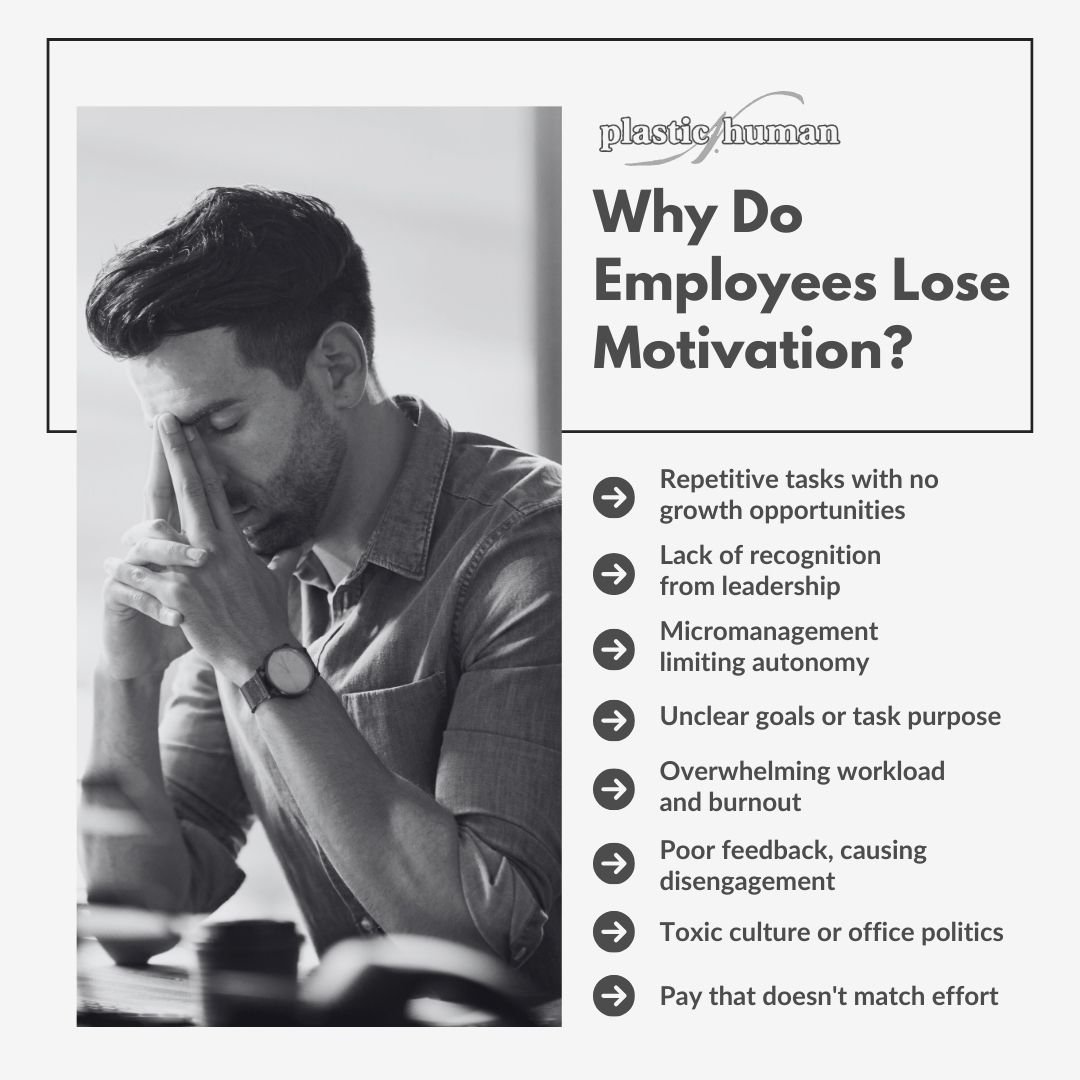
What Causes Lack of Motivation in the Workplace?
The truth is nobody wakes up in the morning thinking, “Gee, I really hope I feel totally unmotivated today!” Yet somehow, motivation tends to come in short supply as soon as some employees think about their jobs. Why? Below are some potential reasons why your workplace’s motivation might be deserting your employees:
- When every day feels exactly the same, with no growth opportunities or new challenges
- Lack of recognition or appreciation for hard work from high-level bosses
- Having a boss who micromanages your every step
- Unclear goals or lack of purpose in daily tasks
- Unrealistic workload that constantly drains employees
- Poor or nonexistent feedback, leaving employees feeling like no one cares
- Negative company culture or office politics that could rival a soap opera
- Feeling undercompensated for your efforts (because exposure and employee experience don’t pay the bills)
Strategies on How to Improve Motivation in the Workplace
Now that we know why motivation matters and what might be killing it, let’s talk about how to actually boost it. Motivation is a key answer to questions like how to manage remote employees, how to manage superstar employees, and even how to be a good manager? Motivation is also a key component of mentoring in workplaces.
Intrinsic motivation from the employees themselves are not always sufficient. They need a steady dose of extrinsic motivators as well. Here are some tips to increase employee motivation and zeal to be more productive:
Lead with vision.
Remember when you were a kid and your parents said “because I said so”? Yeah, that didn’t motivate you then, and it won’t motivate employees now. People want to know the “why” behind their work. So show, don’t just tell. How?
Help your staff connect the dots, from their daily tasks to the larger company goals. Share success stories that demonstrate how impactful what they are doing is. But don’t be generic. Use real examples! Instead of saying “We’re disrupting the industry”, try “Remember how Sarah’s project last month helped our client save $50,000? That’s exactly why what we do matters!” When people understand the bigger picture, they’re more likely to be creative in their roles.
Get SMART with goals.
Nothing kills motivation faster than feeling like you’re wandering in a desert of endless tasks with no oasis in sight. Clear goals are like a workplace compass. It’ll show your employees exactly where they’re going.
So, break big goals into bite-sized milestones by using the SMART framework. That means the goals should be specific, measurable, achievable, relevant, and time-bound. However, make it visual! Use progress bars, charts, or even a simple whiteboard. People love seeing that satisfaction bar fill up like in a video game.
Recognize and reward.
Nobody wants to feel like their hard work goes into a black hole of nothingness. Recognition is very important in the workplace. Even more important, it should be timely, meaningful, and genuine. Proper recognition and reward give people a boost and make them want to come back for more.
However, avoid being generic here as well. It doesn’t always have to be a monetary reward every time. Also, you can’t keep promoting every employee each time they deliver big time. Personalized and creative rewards can prove to be just as useful and impactful. Even a “simple” gesture like a coveted parking spot could mean the world to the employee.
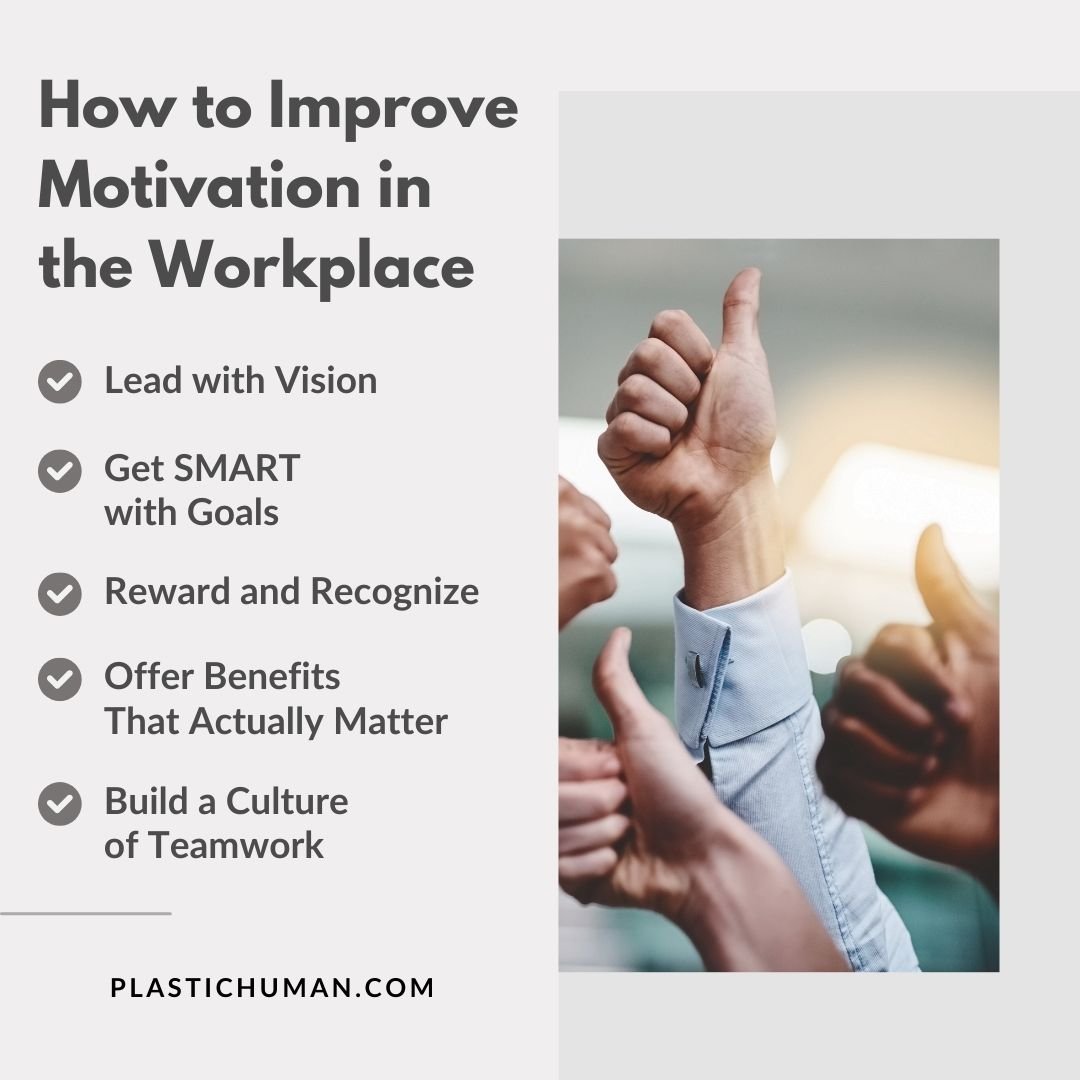
Offer benefits that actually matter.
Do you know that 80% of employees would choose additional benefits over a pay raise? This is simply buttressing my earlier point. To reward your staff for a job well done is noble. However, it should be done right so it won’t be counterproductive. Modern workers want employee benefits that actually, you know, benefit them.
So, survey your team about what benefits they actually want. You might be surprised that installing a ping-pong table or some fancy ergonomic chairs in the break room isn’t cutting it anymore. Instead, you may want to consider offering flexible working arrangements. Providing growth and development opportunities can work magic as well.
Build a culture of teamwork.
Humans are social creatures. Even the most introverted among us don’t like living or working in isolation or being lonely. By creating a strong team culture, you can make work feel less like work and more like being part of something awesome.
You can make each worker feel like they belong to a big family by creating opportunities for collaboration. Better still, establish team traditions and rituals like team lunch. A team working in unison is often more productive. And when productivity soars, celebrate team successes, not just individual wins.
What Are Examples of Motivation in the Workplace?
Let’s look at some real-world examples of what actually gets people excited to come to work:
- Recognition programs like Employee of the Month
- Celebration of milestones and achievements
- Peer recognition programs
- Skill-building workshops
- Mentorship programs
- Cross-training in different departments
- Performance-based bonuses
- Profit-sharing programs
- Spot bonuses for exceptional work
- Flexible working hours
- Work-from-home options
- Mental health days
- Regular feedback sessions
- Innovation challenges
- Team brainstorming for company improvements
When motivation goes up, your team members are happier, results get better, and everyone WINS.
Creating a motivated workplace isn’t just about ticking boxes or implementing the latest trendy management technique. It’s about understanding your people, recognizing their potential, and creating a positive work environment where everyone can thrive.
Want to become the kind of leader who actually gets it? The kind who creates an environment where motivation flourishes naturally? Then head over to my blog and podcast for a regular dose of game-changing content that’ll transform your leadership prowess.
You’ll find practical strategies, real-world insights, and actionable tips that will help you on so many levels. These resources will help you build truly motivated teams and create a workplace where everyone can reach their full potential. While you are at it, you’ll acquire more leadership skills that will inspire your team and promote employee retention.
Don’t just manage; lead. Don’t just lead; inspire. See you at the top!