

Conflicts at workplaces need no introduction. It’s as common as coffee breaks and Monday morning meetings. While there may be millions of reasons why conflicts arise in different workplaces, they all share a common denominator: no man is infallible. Think about it: we all have different personalities and are definitely not perfect. So, having personality clashes or disagreeing on certain subjects can’t be helped.
We’ve all experienced those moments when we don’t feel comfortable, right? The tension that fills the air when two employees are at loggerheads is no fun. Then there are the hushed conversations by the coffee machine and awkward silences in team meetings. What all these do is corrupt workplace energy, employees feeling awkwardness everywhere, and DEFINITELY no performance improvement.
But here’s the thing: it’s well established that disputes among employees can be quite complicated to deal with. But what happens when the conflict is between a manager and an employee? That’s a whole new level entirely. Disputes like this can get ugly real quick if left to fester for long. As an employee, your career and paycheck may be on the line. And as a manager, how do you assert your authority without coming across as a bad manager or tyrant?
No business owner wants this basic human nature to turn his work environment upside down. That’s why I put together this guide on how to resolve workplace conflicts early.
How To Resolve Conflict Between Managers and Employees
Resolving conflicts between managers and employees isn’t always a walk in the park. Nevertheless, it’s not an impossible task. Here are some tried-and-true strategies that can help you resolve the conflicts between managers and employees:
Recognize the Red Flags
Conflict in the workplace is inevitable, but you can always stop it from escalating by paying attention to the early warning signs of conflict. These may include a sudden drop in communication, increased aggression and tension during meetings, or a decline in the quality and quantity of work output. By catching these signs early, you can address issues before they escalate into full-blown conflicts. You can make spotting these red flags easier by checking in regularly with your team managers and employees alike. Having an open-door policy will go a long way in helping you catch potential issues early on.
Detach from Biases
Let’s face it: we all have biases, whether we like to admit it or not. However, such habits must not be allowed when trying to resolve conflicts. You need to put your feelings aside and be objective when attempting to make things good again between two angry individuals. Things will only get worse if you’re already nurturing preconceived biases or playing favorites.
How can you free yourself from these biases? Try viewing the situation from different angles. Put yourself in their shoes. What would you do if you were both the manager and the employee?
Focus on the Behavior, Not the Person
Many people tend to weaponize disagreements for selfish reasons. They see conflicts as a window to launch personal and emotional attacks on the other party. Don’t tow the same line when trying to resolve conflicts. Instead, focus on specific actions or behaviors. For instance, rather than telling the employee, “You are always so disorganized,” try telling him or her, “I’ve noticed that the last three reports were handed in late.”
Adopting this conflict resolution strategy ensures the conversation remains constructive and focused on problem-solving. The other party is also less likely to become defensive, which often slows down resolution.
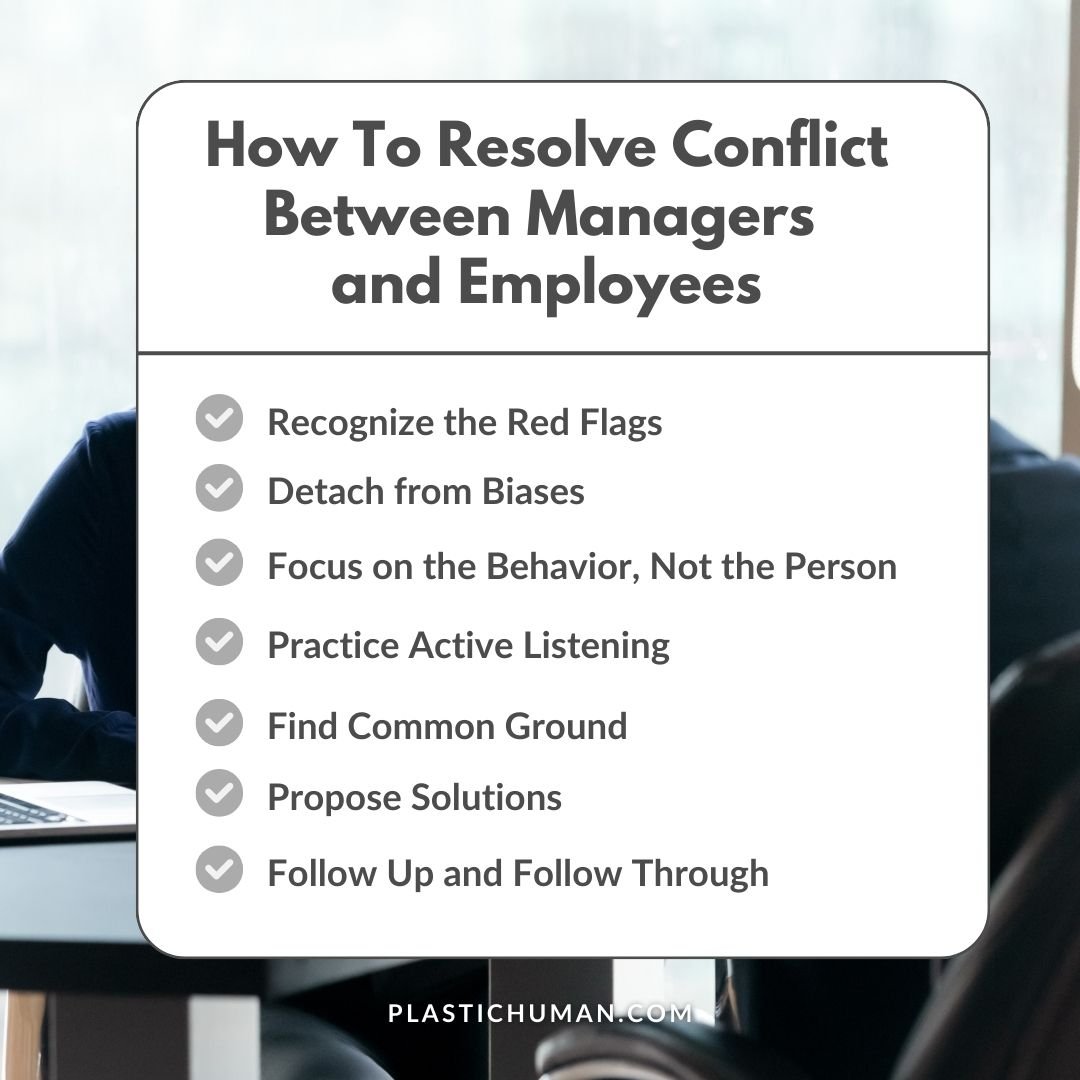
Practice Active Listening
A wise man once said, “The most important thing in communication is hearing what isn’t said.” As a conflict mediator, you need to practice active listening. Chances are, both parties just need someone to really give them a listening ear for things to work out. You don’t have to be a human resources (HR) professional to give them a listening ear. And when you do, listen with the intent to understand their plea, not with the intent to reply.
Active listening helps build trust and shows you respect the other person’s perspective. This also encourages them to open up to you and even reveal underlying issues that you might not have noted otherwise. So, really listen to what each person has to say without interrupting. You can even repeat what you’ve heard to let them know you’re following.
Find Common Ground
After hearing what both parties have to say, find a middle ground on which they can both stand. Oftentimes, even in the most bitter arguments, there’s always that one thing both parties agree on. For instance, they both want the project to turn out well irrespective of the differences in opinion.
Doing this helps provide a more positive atmosphere to deal with conflicts and hold positive dialogues. It also serves to remind both parties that they are actually in the same boat and working towards shared goals.
Propose Solutions
The goal of conflict resolution is to find solutions or a way for all parties involved to move forward. So, you need good problem-solving skills as a conflict mediator. Pulling this off may sound difficult, but it’s not. Be willing to negotiate and work together in order to find solutions. It’s also important to note that the best resolutions often come after both parties put their heads together.
Follow Up and Follow Through
Once you’ve charted a course for both parties to follow going forward, be sure to follow up. Don’t forget to set a timeframe to check in on their progress and ensure compliance. This shows your commitment to solving the problem for good and avoiding conflict relapse.
Resolving conflicts is an ongoing process; it takes time, effort, and patience from both managers and employees.
We all spend a significant number of hours at our workplaces each day. So, why not make it feel like another home? A workplace that feels like home isn’t just about free snacks and casual Fridays. It’s about creating an environment where everyone feels heard, respected, and valued. But that doesn’t mean there won’t be disagreements. After all, even families have conflicts, no matter how transient they are.
Conflict resolution is a skill, and like any skill, it improves over time and with practice. So, you need not be discouraged if your first attempts don’t work out as imagined. Instead, keep at it, and soon you’ll realize that managing delicate matters like manager-versus-employee conflict becomes easier with time.
Interested in learning more about work and employment relationships and career development? I’ve got you covered! Listen to my podcast, where I discuss such issues and many others. Be sure to also check out my blog for posts on topics ranging from leadership to managing work-life balance. To get a taste, check out my post, “Why do Organizations Need Leader-Managers?” for a detailed guide on how to be an indispensable leader-manager and make your mark in the business space!