
We all want to work in a place where we feel welcome and valued, right? That’s what a healthy workplace culture is all about. But let’s be honest creating and keeping this kind of environment isn’t always as easy as it sounds.
Think about your own workplace for a minute. How does it feel to be there? Is it somewhere you look forward to going each day? For many of us, the answer might be complicated.
Here’s the thing: Lots of factors can turn a good workplace into a bad one. Sometimes it’s obvious stuff, like a boss who micromanages or coworkers who gossip. But often, it’s something much harder to spot unconscious bias. It’s those hidden assumptions we all have about people without even realizing it. And yes, every single one of us has them!
These hidden biases can really mess with how we treat our coworkers, even when we don’t mean to. They can affect who gets hired, who gets promoted, and even just day-to-day interactions at the office. So today, I’ll be uncovering how these unconscious biases can impact the workplace and what you can do to nip them in the bud.
How Does Unconscious Bias Affect the Workplace?
Before we jump into solutions, we need to understand the problem. That’s why I’ll be breaking down exactly what unconscious bias means in simple terms. I’ll also walk you through some scenarios of how unconscious bias plays out across different offices today.
Once you know what unconscious bias is and how it shows up at work, you’ll be better equipped to spot it and stop it. By the end, you’ll have practical tips to help make your workplace fairer and more welcoming for everyone.
What is Unconscious Bias in the Workplace?
Think of unconscious bias as your brain’s autopilot mode. It’s when we make quick judgments about people without even knowing we’re doing it. At work, this can show up in many different ways. It could be automatically assuming a younger employee isn’t ready for leadership roles. Or perhaps you think someone with an accent might not be good at client presentations.
These thoughts don’t necessarily mean we are jealous of your coworker or feel threatened by their momentum. Rather, they’re just shortcuts our brains take. The tricky part is that most of us don’t even realize we’re doing it. That’s why we need active awareness and to put an end to it before it causes irreparable damage.
What Are Examples of Unconscious Bias in the Workplace?
Let’s look at some common types of unconscious bias you might see at work:
- Age Bias: Assuming that younger workers are generally irresponsible and lazy folks or that older workers can do little or nothing with new technologies.
- Gender Bias: Believing that leadership roles should belong to the male gender only or that women are only supposed to nod along and follow.
- Appearance Bias: Profiling people and making assumptions about their skills based on how they dress or look.
- Affinity Bias: Playing favoritism with people who remind you of yourself or share certain things in common with you.
- Confirmation Bias: Only seeking information that supports your idea or beliefs and shutting out others.
- Halo Effect: Thinking someone who’s good at one thing must be good at everything
- Horns Effect: Using a past negative occurrence, mistake, or trait to judge someone’s every future action and letting this overshadow their positive qualities.
- Education Bias: Judging someone’s abilities solely based on where they went to school.
What Causes Unconscious Bias in the Workplace?
Now, let’s talk about why these biases pop up in the first place. Our brains like shortcuts. We see and process so much information every day that our brains try to make quick decisions. Sometimes these shortcuts lead to unfair assumptions.
Another factor is what we see growing up. The TV shows we watch, the books we read, and the people around us can all shape how we see the world. The messages we get from such exposures may plant the seed of implicit bias in us. They may condition our thought processes and perspectives, sometimes yielding unfair and misguided assumptions.
Limited exposure is another cause of unconscious bias. If we haven’t spent time with different kinds of people, our brains might jump to conclusions about them. Jumping to wrong conclusions leads to misguided unconscious biases.
There’s also the workplace culture. The type of leadership can influence the organizational culture. Sometimes, biases get baked into “how things are done here” without anyone noticing. When this happens, unconscious biases may take center stage and wreak havoc from top to bottom.
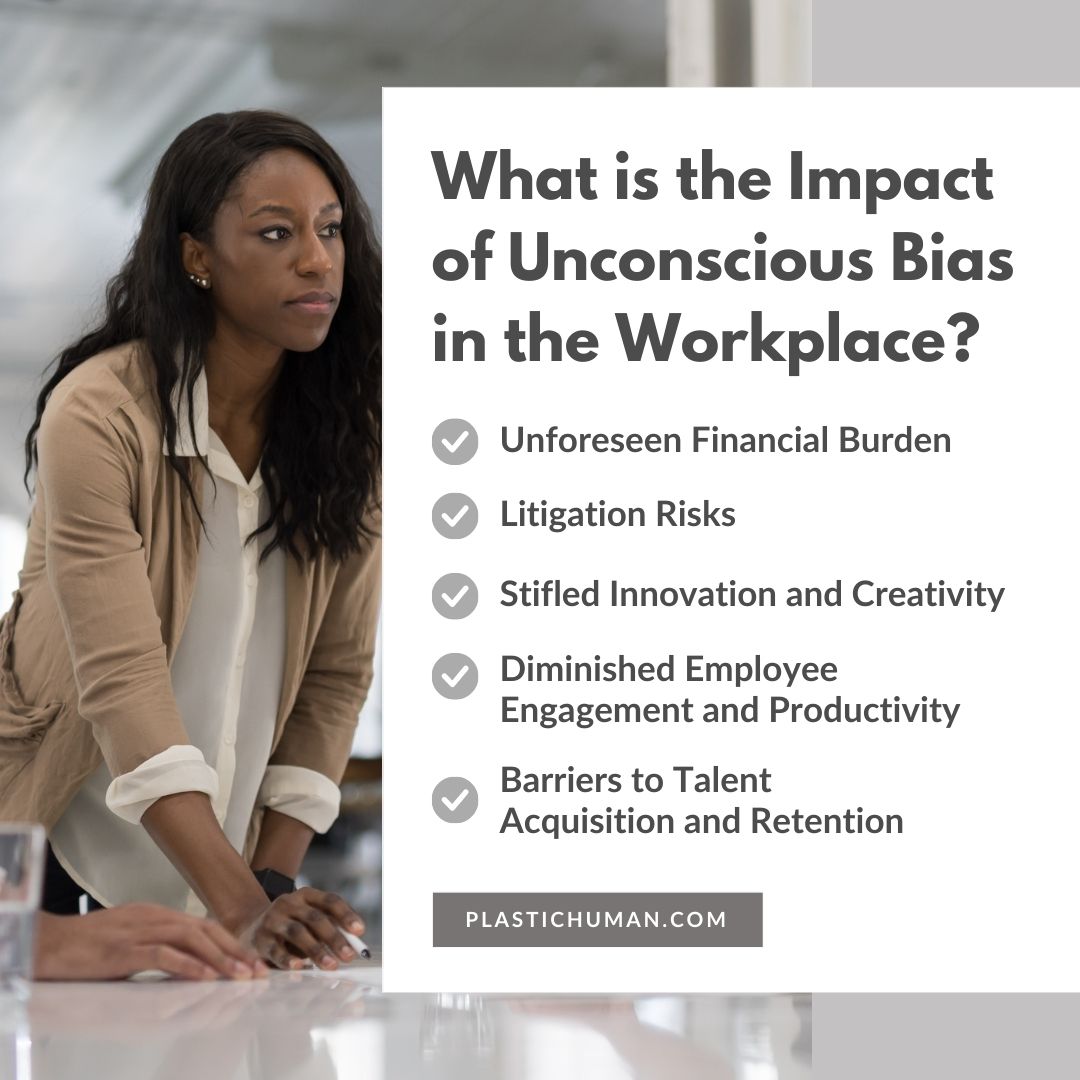
What is the Impact of Unconscious Bias in the Workplace?
When unconscious bias creeps into the workplace, it doesn’t just hurt feelings. It can have serious consequences for both employees and the company’s bottom line. Resolving conflict between employees and managers will become easier once unconscious biases are addressed. Managers will also find managing their superstar employee less challenging.
Let’s look at how different types of bias can create real problems in the workplace:
Unforeseen Financial Burden
Employees who fall victim to unconscious bias may up and leave such a “toxic working environment.” This may result in an unplanned financial burden on the company owner. Now, they have to spend more money to advertise, interview, screen, hire, and train replacements. There’s also the issue of lost productivity during transitions.
Litigation Risks
No one enjoys being on the receiving end of unfair treatment and discrimination, whether from intentional or unconscious bias. Victimized employees may decide to take legal action against individuals or the company. The lawsuits, penalties, and that ensue fines may cripple the company. But that’s not all. Bias-related litigations may severely damage a company’s reputation and grind business to a halt.
Stifled Innovation and Creativity
Organizations riddled with unconscious bias, especially against people from other cultures, are bound to have little or no diversity in team members. Consequently, they may miss out on the leadership, innovation, and creativity that come from varied perspectives and experiences. Studies show that diverse teams are 87% better at making decisions. Without the necessary diversity or thinking outside the box, organizations risk having a homogeneous work environment that may put them at a competitive disadvantage.
Diminished Employee Engagement and Productivity
Employees who experience or witness bias in the workplace tend to show less commitment and engagement. They just want to get in and out of the workplace in one piece. Such disengagements give rise to a series of undesirable events. I’m talking about absenteeism, decreased quality of work, less productivity, higher turnover rate, and more.
Barriers to Talent Acquisition and Retention
Unconscious bias in recruitment processes can prevent organizations from hiring the best candidates. About 79% of HR professionals admit that unconscious bias affects the decision-making process of recruitments. The implication is that hiring managers have a narrow talent pool to work with. Ergo, they may miss out on opportunities to bring in top performers. It gets worse. When existing employees perceive bias, they’re more likely to look for new jobs, creating a continuous cycle of talent loss.
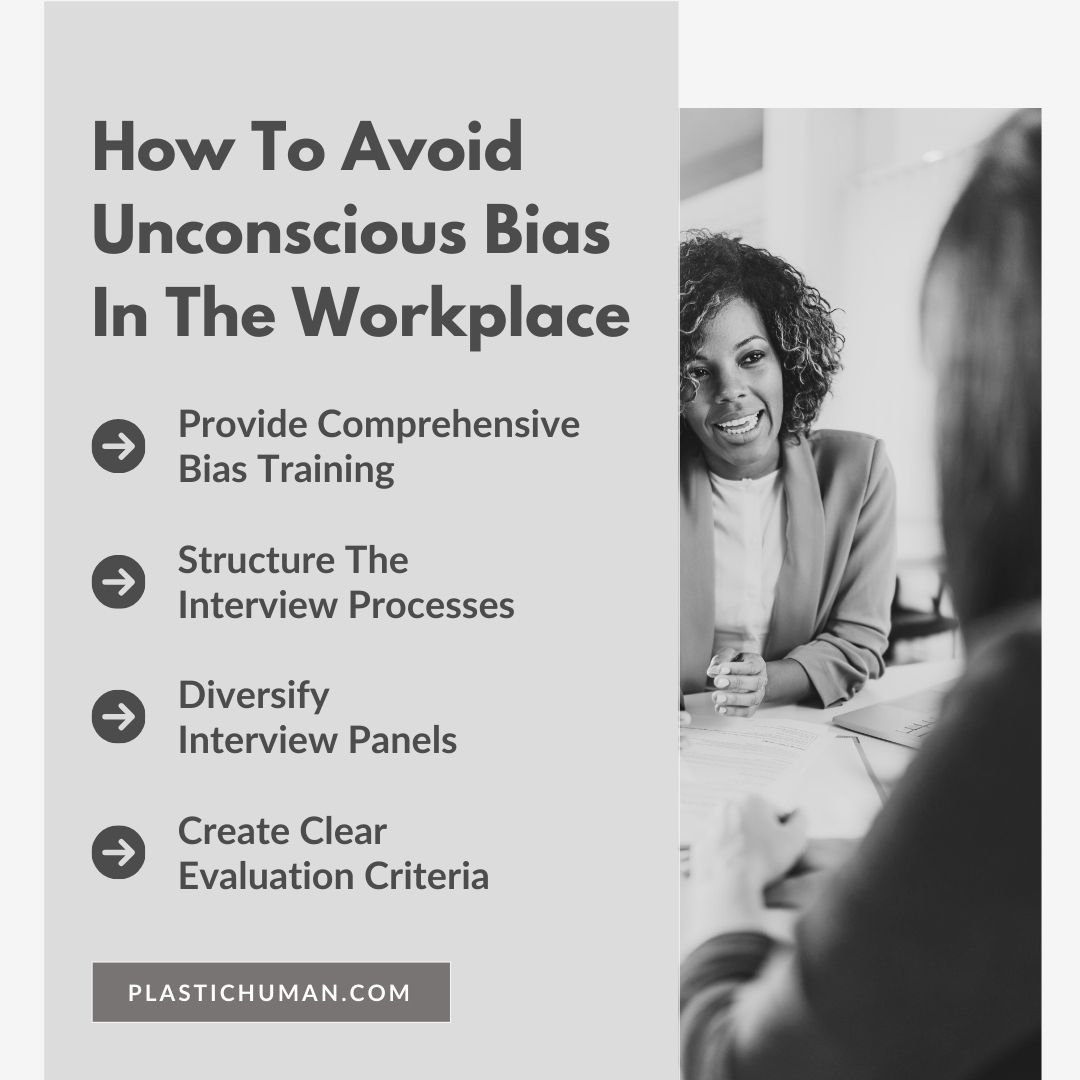
How to Avoid Unconscious Bias in the Workplace
Let’s check out some strategies organizations can implement to create a more inclusive environment and tackle unconscious bias.
Provide Comprehensive Bias Training
Creating awareness and training programs to address unconscious bias is important. This is vital because many people don’t even know they are being biased in their actions. Show them how unconscious bias harms fellow coworkers and the company’s progress. Educate them on bias markers to watch out for and practical strategies to counteract them. You can get the message across effectively using certain training approaches. I’m talking about using real-world scenarios, role-playing exercises, and ongoing reinforcement through microlearning modules.
Structure The Interview Processes
At times, interviewers are guilty of having premeditated notions and unconscious bias due to a person’s appearance, mannerisms, or even background. In times like this, interviewees are not offered the same yardstick for evaluation. To avoid situations like this, create standardized interview questions and evaluation criteria for all candidates. Emphasize that all interviewers use the same questions in the same order for all candidates. You can also leverage some AI-powered tools to screen resumes for skills and experience while hiding demographic information.
Diversify Interview Panels
Another way to promote diversity in recruitment is to have diversity and inclusion in the HR department itself. Aim for panels that represent different demographics, departments, and levels within the organization. Better still, implement a system where each interviewer independently evaluates candidates before discussing them as a group. This helps prevent groupthink and ensures multiple perspectives are considered.
Create Clear Evaluation Criteria
Interviews aside, clear evaluation criteria are needed for other company activities or actions. Each staff member should be subjected to the same criteria for performance reviews, promotions, or project assignments. These criteria should be specific, objective, and measurable criteria. Managers should also come together periodically and discuss evaluation standards to ensure consistency across the organization.
Overcoming unconscious bias requires commitment, education, and consistent action from all levels of leadership.
Unconscious bias in the workplace is a serious issue that should be tackled with utmost urgency from top to bottom. By doing so, you can have a more inclusive, productive, and successful organization where every individual has the opportunity to thrive.
Unconscious bias can also be the bane of being a great manager or leader. Instead of moving people’s hearts, you may end up pushing them out of the company. You shouldn’t let unconscious bias hold your leadership potential back. That’s why I urge you to check out my blog and podcast for a regular dose of career-empowering and life-changing content.
You’ll find everything you need to curb unconscious bias on a personal level and among your team members. You’ll also get practical leadership strategies and insights on building equitable teams. I’m here to help you create workplaces where everyone can achieve their full potential. See you there!