

Just as every individual has a unique personality, so does every business have its own workplace culture or vibe. Some organizations may project this ethos of ‘getting things done and making things happen,’ while others may portray a ‘chill, let’s unwind, and have a beer first,’ culture. As we must have noticed with the cultural trends around us, these company cultures can either make or mar an organization.
But here is the catch: company culture is not something that you simply wake up one morning and find. Rather, it’s carefully cultivated and shaped by the very people at the top: the leaders. These captains of industry are invaluable in that they shape the societal culture of the companies, even if they are not aware of it.
And as the business grows, the culture that was once promoted in the business changes and evolves. Times like this present more opportunities for leaders to influence and steer the wheels of this cultural change. But without the appropriate know-how, a distortion of the workplace culture is bound to happen, which will consequently impact productivity.
So today, we’re going to discuss how leaders influence organizational culture. We’ll explore how a leader’s actions, values, and decision-making can have a domino effect on a whole business organization.
How Does Leadership Influence Organizational Culture?
A number of elements are involved in shaping and influencing an organization’s culture. This may range from the industry in which the company operates to the physical layout of the workplace, among others. Nevertheless, the reality is that leadership remains one of the key determinants of the company’s work atmosphere or culture.
Therefore, understanding the very meaning of organizational culture and the role leadership plays in it is very important for business owners who seek lasting success. After all, it is leaders who set the pace. Consciously or unconsciously, decision-makers make choices that shape the environment people work in every single day.
What is Organizational Culture?
In its simplest form, organizational culture refers to the norms, standards, and practices that various executives, staff, and other stakeholders within an organization employ when managing relationships with other people within the organization. It’s the unwritten rules, the shared understandings, and the subtle nuances that shape everything from decision-making processes to how successes are celebrated (or failures are handled, for that matter).
Culture is not an innovative idea of placing a ping pong table inside the break room or wearing jeans on Fridays (even though both of these practices help in establishing the overall culture). It’s more about structural processes beliefs, mindsets, and orientations constantly shaping an organization’s path and defining its output.
Quoting Tony Hsieh, the ex-CEO of Zappos, “A company’s culture and a company’s brand are essentially two sides of the same coin. What goes around the office comes around to the customer.” Basically, a happy workforce begets a happy customer base, and vice-versa.
A positive culture is like a magical wand that everyone wants to use; It helps employees overcome challenges with a lot of ease and be more productive. On the other hand, a bad working culture will cultivate resentment and distrust, hence workers tend to readily give up or lack enthusiasm.
How Leadership Influences Organizational Culture:
A company’s culture doesn’t simply materialize out of thin air. Rather, it is meticulously shaped and influenced by the actions, values, and priorities of those at the helm the leaders. Like skilled sculptors chiseling away at a block of marble, effective leaders have the power to mold and refine their organization’s cultural identity.
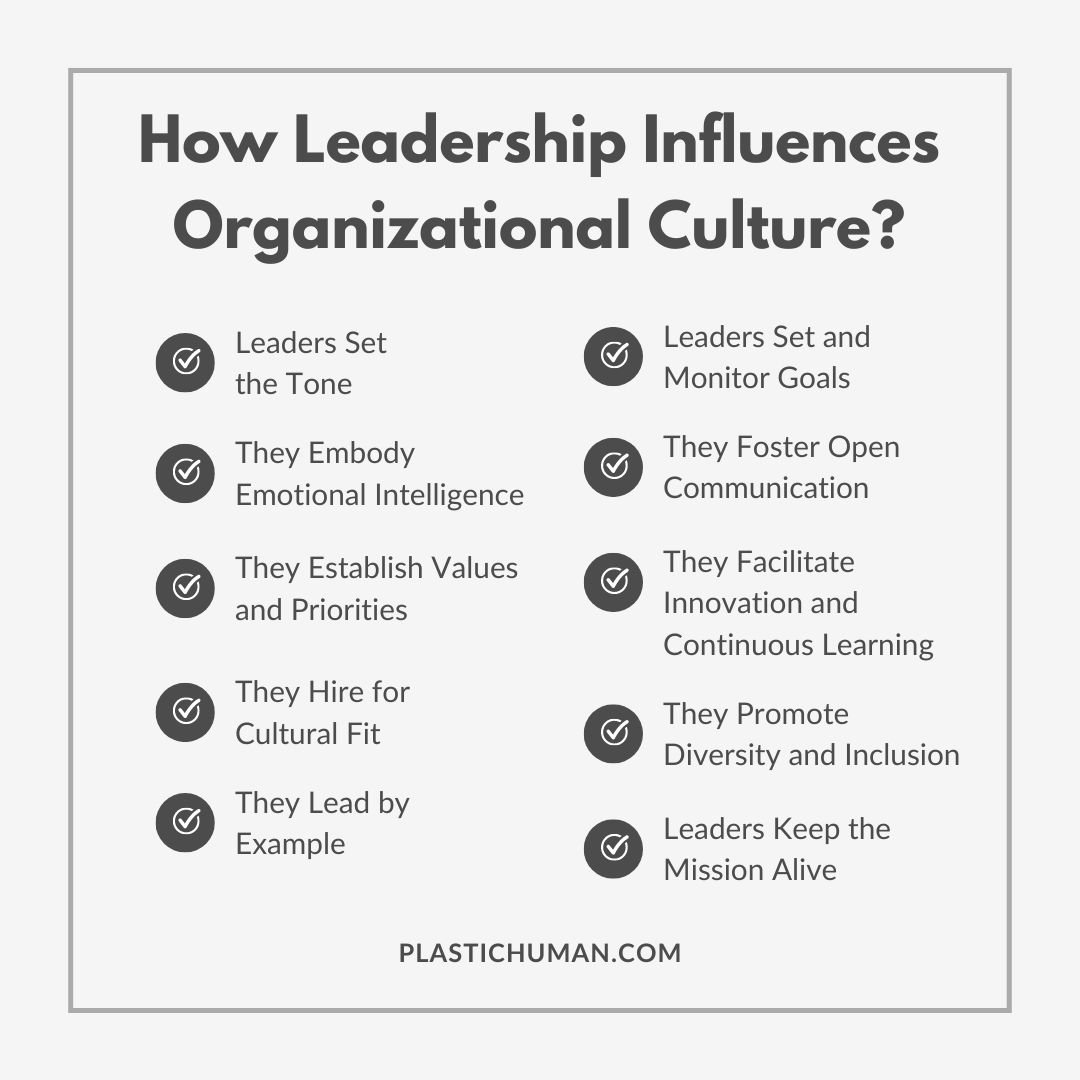
Below are ways leaders can influence a positive and productive work culture:
Set the Tone
Organizational culture lies with leaders and their working styles from the way they speak, their actions, and the decisions they make at the workplace. All these send powerful signals about what is valued, what is acceptable, and what is expected within the company’s walls.
Embody Emotional Intelligence
Self-awareness and empathy are two of the most effective ways to influence and shape a strong organizational culture among workers. Great leaders manage to establish responsive relationships with subordinates and colleagues. This helps foster inclusiveness, a sense of feeling valued, and mutual respect among all the staff.
Establish Values and Priorities
It should be stressed that values are not something that leaders give mere speeches about; they imbibe them. Values define the ‘how’ of the desired conduct in an organization. Communicating and preserving the essence of the organization is your duty as a leader. The desired behaviors must be modeled to support and sustain the organizational culture.
Hire for Cultural Fit
The hiring process and type of workers recruited by a leader influence organizational culture. Choosing the ideal cultural fit is more than just fancy degrees or impressive resumes. It’s very important the hiring process reflects the culture you want to embrace. After all, no leader wants to hire some arrogant scholar or highly-paid individual who would later turn out to be a nightmare at the place of work. Yes, they may get things done, but at what price?
Lead by Example
Sometimes, what a person does matters more than what they say. Leaders who lead by example leave a powerful long-term impression on an organization. This reciprocal process illustrates how leaders set an example that others follow, setting the tone at every organizational level. That’s not to say you shouldn’t be authentic as a leader. Be yourself, but know that what you dish out to others has a way of reflecting back on you.
Set and Monitor Goals
Setting and monitoring business goals, be it short-term or long-term, is essential. It makes you and those in your crew inspired, proactive, and engaged in the best possible sense of being ‘hooked.’ And let me tell you, things can only get better when you complete a big milestone. That is when life becomes so much more magical! This helps cultivate a tradition where your team works in tandem, such that they all win as a team. This is how you build a culture in which people are eager to reach their goals side by side.
Foster Open Communication
Organizations that support an open and amicable communication culture also begin the process at the leadership level. Managers and other organizational heads who listen to and consider the opinions of employees engage in two-way communication frequently. They accept negative comments about their organizations as constructive criticism. This helps establish trust, teamwork, and organizational learning for better productivity.
Facilitate Innovation and Continuous Learning
In this sense, the degree to which the organization is innovative and in which learning is practiced is exemplified by the leadership of the organization. Such actions include embracing risks in a business organization, learning from mistakes, and upscaling different skills. All these help create a workplace that’s based on curiosity and development.
Promote Diversity and Inclusion
Diversity plays a significant role in the culture of the organization. It promotes and establishes relationships between the employee as well as between the staff and their bosses. CEOs who give importance to diversity and accept people from all cultures create a colorful team full of creativity for success.
Keep the Mission Alive
Does the short, crisp, and to-the-point version of your organization’s mission statement get you in the mood every morning? Then, your employees need that too! So, how can you make it exciting for different teams? Ensure it gets mentioned in your office meetings, discuss it at your corporate events, make it a focal point for many significant events.
Leadership is more than just an opportunity to have power; it is one of the major factors defining organizational behavior and the people in it.
To sum up, what we have discussed in this post is that leaders remain the key shapers of their organization’s culture. They hold the levers to determine the established set of norms and patterns that, in turn, shape the workplace atmosphere.
Organizational culture means setting the proper example, providing behavioral paradigms, and constantly promoting the principles that define the company’s values and mission. This helps establish a proper working environment that not only serves as a recipe for success but also helps employees feel like they are important parts of the whole picture. Your workers will believe that they are needed, share a common goal with you, and work harder to achieve it.
You need not embark on this journey of leadership alone. So, I invite you to stay tuned to my podcast and blog, where I will continue exploring the art of leadership. These insights I provide will inspire you to open your mind and heart and receive the keys to transforming yourself and those you lead.