

Let’s face it: reading culture is dying a slow death in our society today. Many of us no longer have time for books, be they physical or electronic.
You know the main culprits: the internet, social media, smartphones, and many others. Things have not been the same ever since the digital age ushered in these time-hugging innovations.
Well, tell me. Do you aspire to make a bold statement in the business space? Want lasting success, no matter what? If you answered “yes,” then you must read books. It’s a no-brainer!
There’s a reason why reading good books has stood the test of time as a tried-and-true method for business success. It’s like having a mentor hold your hands and provide valuable secrets to reaching your goals faster.
That’s why I’ve put together this roundup of the best business management books you NEED to check out! Let’s dig in!

10 Best Business Management Books to Read
Do you know that knowledge is the best food you can ever feed your brain? It’s much better than what TikTok, YouTube, Instagram, and even Netflix have to offer you. And with today’s fast-paced and highly competitive marketplace, continuous learning is what separates the pacesetting businesses from the strugglers.
Below are my top picks for the best business management book you must check out today:
‘‘Good to Great’’ by Jim Collins
Jim Collins’ “Good to Great” is one of the best sellers in business literature. Collins and his team dedicated 5 years of research to investigate how certain companies manage to go from good to great. And better still, how such companies kept doing great for over fifteen years? The book sheds light on the factors that made this possible. Among these factors are disciplined people, disciplined thinking, and disciplined action.
Collin’s data-driven approach is a standout feature of this book. He also sheds more light on key practical concepts like the hedgehog concept and the flywheel effect. This book will surely benefit anyone interested in learning about leadership, organizational culture, and strategic thinking.
“The 7 Habits of Highly Effective People” by Stephen R. Covey
This is a classic read with wide popularity among business-savvy people. So, it’s not surprising Covey has sold over 40 million copies worldwide. In this book, Covey reveals a principle-centered way of dealing with individual as well as organizational challenges. The book is devoted to character ethics and changes in paradigms. Covey believes true change is only possible when we are willing to have an open mind and change our perceptions.
Covey explained the seven habits of highly effective people in detail using very clear illustrations and easily relatable events. He also gives practical advice on how to be more proactive, get your priorities right, and develop interpersonal skills.
“The Lean Startup” by Eric Ries
In “The Lean Startup,” Eric Ries revolutionized how people approach new businesses. The book is based on the author’s experience as an entrepreneur. The book shows that, with the correct approach, starting and managing startups in this modern world can be less daunting and more rewarding.
Ries presents a scientific approach to handling some common problems startups often face. He touched on both personal and professional challenges. He also recommends using certain techniques, like validated learning, rapid experimentation, and iterative product releases. He also discussed why you must learn to make quick, customer-centric decisions in uncertain environments. This book is particularly ideal for people working in innovative industries.
“Dare to Lead” by Brené Brown
Brown applies her findings to the topics of vulnerability and courage in the corporate environment. She challenges the traditional approach of leadership, insisting on the importance of vulnerability, empathy, and emotional intelligence in management.
Brown’s entertaining writing style, coupled with the use of real-life examples to explain tough concepts, makes this book a great read. Brown also filled her book with a number of exercises that’ll help develop your leadership skills and make you a brave leader. This book is particularly perfect for managers hoping to become more emotionally intelligent and foster a culture of trust and innovation in their organization.
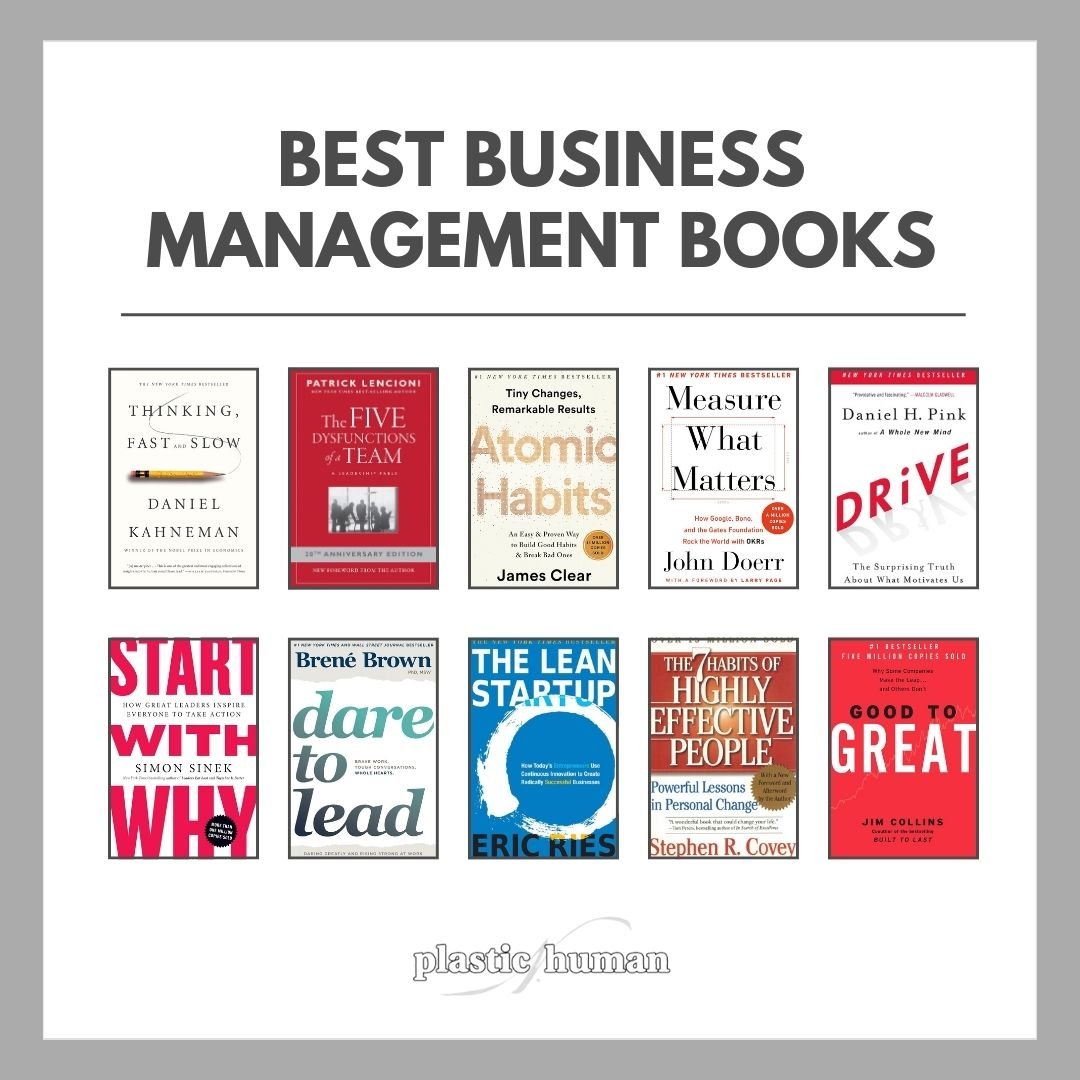
“Start with Why” by Simon Sinek
Sinek presents a simple but powerful idea: great leaders inspire action by starting with the ‘why’ behind what they do. To further buttress this idea, Sinek reminded the readers of the reasons behind the exploits of the Wright brothers, Martin Luther King Jr., and even Apple.
Perhaps the best thing about this book is its practical and easy-to-understand framework for becoming a great leader and designing organizational strategy. The book also serves as a perfect guide on how to articulate and share your business vision with the rest of your team to get the desired response and output. You’ll also learn about ways to motivate workers and align team efforts with the company’s vision.
“Measure What Matters” by John Doerr
In John Doerr’s “Measure What Matters,” the author introduces the Objectives and Key Results (OKRs). This is a goal-setting framework that’s being used by tech giants like Google and Intel, among other big companies. Using this system, he showcased an effective method for setting and achieving ambitious goals.
This book is particularly good at improving discipline and unity among team members, as well as promoting accountability and transparency. Doerr identified these parameters as the real drivers of success in any organization. He further used case studies from different organizations to help the reader understand how those concepts can work in the real world.
“Drive” by Daniel H. Pink
In “Drive,” Daniel Pink comes with a message that challenges the traditional views on motivation. He insists that your motivation to perform at your optimum should not be because of extrinsic incentives like monetary rewards. It shouldn’t be because of potential consequences like getting fired either. Rather, you should be motivated by intrinsic incentives. These incentives include the desire to direct your own life, to learn new skills, and to live a life of.
In “Drive,” Daniel presents several scientific findings and outlines their relevance to the management field. The book also provides ways to build a collaborative and productive workplace. Daniel Pink also revealed tips to tap into your team member’s internal drive.
“Thinking, Fast, and Slow” by Daniel Kahneman
This is not a business book in the literal sense, but it contains invaluable insights on decision-making and risk evaluation in business management. Kahneman, who is a Nobel Prize winner, gives a detailed account of the two systems that drive how we think and make decisions. One system is fast and instinctive, while the other is slow and more deliberate.
This book will improve your critical thinking skills. It’ll also open your eyes to certain cognitive biases most people have and how they impact decision-making. As a manager, you’ll learn how to make more informed decisions and handle risks better.
“The Five Dysfunctions of a Team” by Patrick Lencioni
In his book ‘The Five Dysfunctions of a Team, ‘Patrick Lencioni uses a fable to highlight some factors responsible for organizational politics and team failure. Patrick’s narrative approach makes this book unique and an engaging read.
This book provides a detailed breakdown of these five dysfunctions. It also offers a clear framework for understanding and addressing these team issues. This book is ideal for managers looking to nip any obstacles to team success in the bud. According to Patrick, common obstacles include mistrust, fear of conflict, and many others. This book also provides a very effective and easy-to-follow map of how to build tight-knit, high-performing teams.
“Atomic Habits” by James Clear
Atomic Habit is quite helpful in giving usable instructions on how to form good habits and break bad ones. Clear makes the compelling argument that tiny changes can yield big outcomes. It’s not strictly a business book. Nevertheless, most of the insights are relevant to personal and organizational development.
The best part of the book is the practical tips and guidelines on how to change your habits. He even provided detailed explanations of the science behind habit formation. This book does not only advocate for continuous growth and personal development by managers and their team members. It equally shows how to achieve this to improve various aspects of your work and life.
How to Become a Better Manager
Being in charge of other people is not as rosy as it sounds. And like that popular quote from the Spiderman movie, “With great power comes great responsibility.” As a manager, your team is your responsibility. Also, how productive they are depends on how effective you are as a manager.
Below are ways to become a better manager for greater team productivity:
Never Stop Learning
Okay, first things first keep that brain of yours sharp! One of the best ways to make certain of this is by immersing yourself in some amazing business management books. I’ve already discussed some great picks, so have a go at any or all of them. The best thing about reading about successful forerunners is that it shortens your learning curve. You learn from their mistakes, see what works, and map a clear path before you even get started.
Listen More, Talk Less
This is probably why you have two ears and one mouth. Nearly all successful business owners agree that doing more listening than talking has great benefits. As a manager, it’s even more important. By practicing active listening, you can hear the unsaid words of your workers. Your team members often have great ideas and insights. They just need you to give them a listening ear and space to share. Besides, people are always more motivated when they feel heard.
Lead by Example
Want your team to be punctual? Be the first one in the office. Looking for more creativity? Show them how it’s done. Your actions speak louder than any memo or email ever could.
Embrace Feedback
This one’s tough, but oh-so-important. Create an environment where feedback flows both ways. Ask your team how they’re doing, and be open to what they say. It might sting sometimes, but it’s the fastest way to grow.
Celebrate Wins (Big and Small)
Don’t wait for the annual review to recognize good work. Celebrate the small victories along the way. A quick “great job” can go a long way in boosting morale and motivation.
Continuous learning and personal development are the keys to business and managerial success.
Within the pages of these business management books are valuable insights and strategies that’ll smooth and fast-track your professional journey. So, you can look forward to becoming a better leader-manager, making smarter decisions, and achieving your goals!
Have other ideas or tips for becoming a better manager? Drop a comment below and share your wisdom!
But don’t just stop with these books, because there’s more where they came from. I’m talking about my blog posts and podcast episodes which I update regularly. Therein, you’ll find in-depth discussions on leadership, career advancement, and much more.
For instance, you can read more on the best books on leadership. In fact, there’s a post on the best leadership books for women if you want more tailored or specific information. See you there!