

You know that feeling when your phone updates itself overnight and you wake up to see everything looking entirely different? Or when your laptop decides to surprise you with a completely redesigned interface? Yes, that’s operating systems (OS) at work!
The truth is, operating systems have come a long way since the days of Windows 95. Back then, it seemed like the coolest kid on the block. But now, we’re juggling between Windows 11, macOS Ventura, and countless Linux distributions. Perhaps we shouldn’t be surprised by that new, upgraded OS keeps surfacing every couple of years. After all, we’re in a digital age. As our dependence on technology grows, so also does the need for more robust operating systems.
This OS evolution also plays an important role in today’s business space. The majority of operations are now automated and depend on technology. Figuring out which OS features will make your daily operations easier and more efficient is of utmost importance!
But here’s the thing–while YouTube tutorials are great for quick fixes, nothing beats a well-written book for really understanding how these digital juggernauts tick. That’s why I’m sharing a roundup of the best books on operating systems you should read!
10 Best Books on Operating Systems
Before we get into the thick of today’s subject matter, let’s take a moment to get our bearings. I’ll start by providing some basic overview of operating systems. Understanding this will help you get so much more out of these books! Think of it as the difference between watching a football game knowing the rules versus sitting there wondering why everyone keeps stopping every few minutes.
In the next sections, we’ll break down what operating systems actually are and why they matter more than you might think in today’s workplace. This background will help you understand why certain books made our list and, more importantly, how they can help you become that go-to tech-savvy person in your office you know, the one everyone runs to when things go haywire!
What is an Operating System?
An operating system can be said to be the world’s most efficient personal assistant. It’s an invisible force that makes sure all the parts of your computer play nice together. When you click that mouse or tap that keyboard, your OS is the one making sure everything happens smoothly behind the scenes.
How well you master your OS can greatly impact your productivity. So, if you see someone zip through their work using keyboard shortcuts while you’re still clicking through menus, know that he has become one with his OS. The books we’ll be discussing shortly will help you do the same!
The Top 10 Books About Operating Systems
Here’s the section you’ve been waiting for. I’ve handpicked these gems based on their readability, practical value, and their ability to explain complex concepts without making your head spin.
Operating Systems: Three Easy Pieces
Written by Remzi H. Arpaci-Dusseau and Andrea C. Arpaci-Dusseau, this book is like the cool teacher you wish you had in college. What makes it stand out? First off, it’s available for free online (yes, you read that right!). But don’t let its easy accessibility fool you into thinking it’s not a good read. You couldn’t be more wrong!
This is a book filled with premium content. The authors break down operating systems into three “easy pieces”: virtualization, concurrency, and persistence. I particularly love how the authors mix humor with serious learning. Plus, each chapter ends with practical exercises that don’t feel like homework.
Modern Operating Systems by Andrew S. Tanenbaum
Tanenbaum doesn’t just tell you how operating systems work; he shows you why they work the way they do. This book is like a fine wine it gets better with each edition. The latest version covers everything from traditional concepts to modern topics like mobile operating systems and virtualization.
What I particularly appreciate is how Tanenbaum uses real-world examples from Windows, Linux, and macOS to illustrate concepts. It’s like getting a guided tour of different operating systems from someone who helped build them.
Understanding the Linux Kernel by Daniel P. Bovet and Marco Cesati
Ever wondered what makes Linux tick? This book gives you all the inside scoop into one of the world’s most popular operating systems. While it’s definitely more technical than the others on this list, don’t let that scare you away. The authors have a knack for breaking down complex kernel operations into digestible pieces.
What makes this book special is its practical approach. Instead of just throwing theory at you, Bovet and Cesati walk you through actual kernel source code. Yes, there are code examples, but they’re explained so well that even if you’re not a programmer, you’ll still get value from them. Cool, right?
Operating System Concepts by Abraham Silberschatz, Peter Baer Galvin, and Greg Gagne
This amazing book is often referred to as “the dinosaur book,” no thanks to its cover. But you’ll be amazed by how modern and relatable the content of this book is. You should also discard the academic reputation of this book as well. While comprehensive, the authors have managed to strike that sweet spot between depth, readability, and engagement.
What I particularly love about this book is how it starts with fundamental concepts and gradually builds up to more complex topics. The real-world case studies scattered throughout the book are equally fantastic. They’ll help you connect theory with practice. Each chapter also ends with practice exercises that range from simple concept checks to challenging problems that’ll make you think.
Design of the Unix Operating System by Maurice J. Bach
Here’s another classic that’s aged like fine wine! While Unix might seem “old school” to some, this book is a masterclass in OS design principles that are still relevant today. Bach takes you on a fascinating journey through the Unix kernel. It explains everything from process scheduling to memory management.
What sets this book apart is its crystal-clear explanations of complex algorithms and data structures. Even though it focuses on Unix, the principles it teaches are applicable to modern OS design.
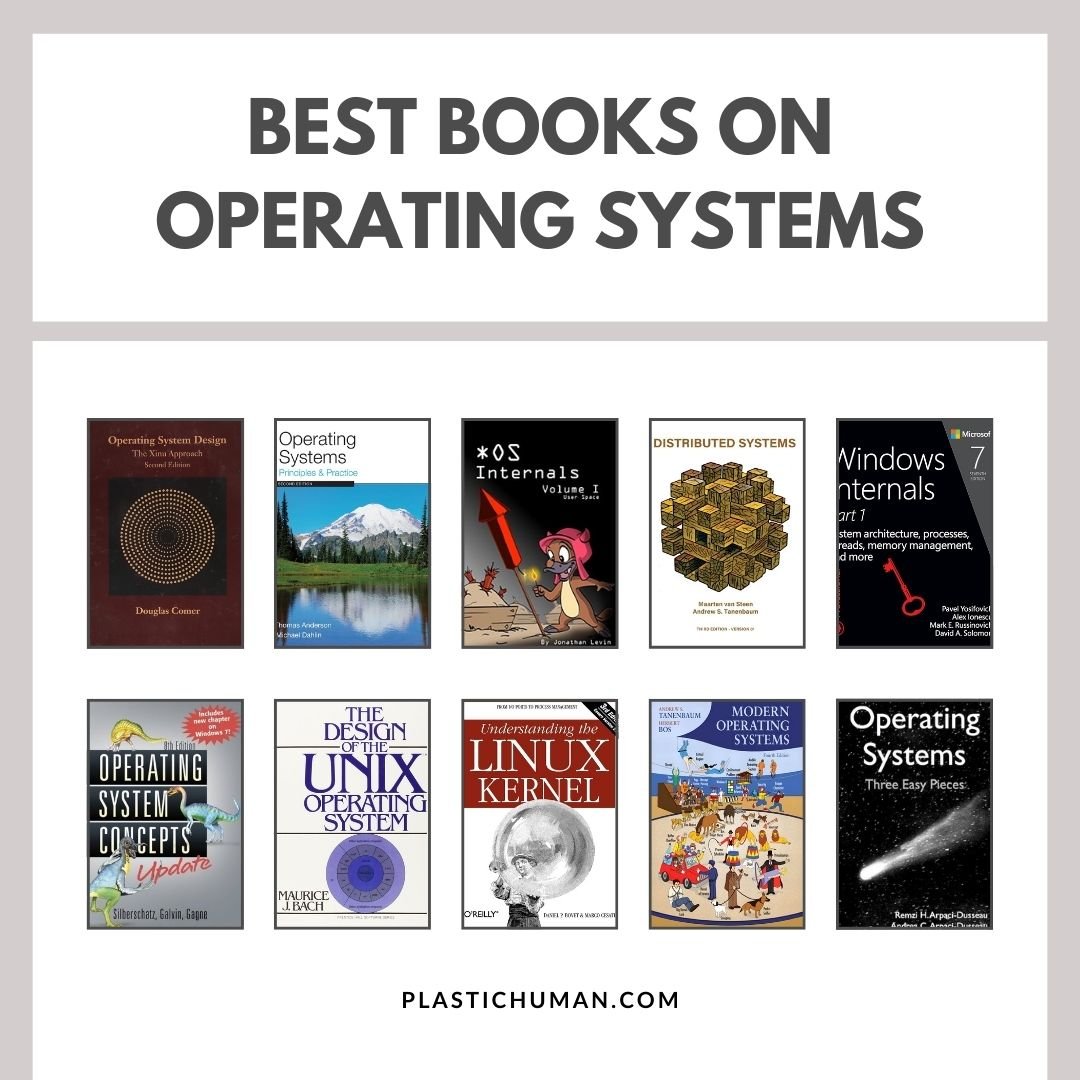
Windows Internals by Pavel Yosifovich, Alex Ionescu, Mark E. Russinovich, and David A. Solomon
If you’ve ever wanted to peek under Windows’ hood, this is your golden ticket. Written by actual Microsoft experts, this book is like having a backstage pass to the world’s most widely used operating system. This book breaks down everything from the architecture to security mechanisms in Windows operating systems.
What I love about this book is how it includes real-world troubleshooting scenarios. You may find yourself recalling your past troubleshooting experiences as you move past the theory into practical knowledge you can use. The authors even explain how to use various Windows debugging tools, which is super helpful for IT pros.
The macOS Internals Series by Jonathan Levin
For all you Apple enthusiasts out there, this series is like getting a guided tour of macOS from someone who’s mapped every corner of it. Levin doesn’t just explain how macOS works; he shows you the actual implementation details, complete with reverse-engineered insights.
The really special thing about this series is how attentive to details and up-to-date the author is on all of Apple’s latest innovations. Plus, Levin’s writing style makes even the most complex topics digestible.
Operating Systems: Principles and Practice by Thomas Anderson and Michael Dahlin
This book does not only explain how things work but also shows you through hands-on examples. Anderson and Dahlin have taken their years of teaching experience and packed it into a book that’s both comprehensive and engaging.
What I particularly appreciate about this book is its focus on principles that remain constant even as technology evolves. The authors also do a fantastic job of connecting historical design decisions with modern implementations. Plus, they include lots of real-world case studies that help you understand why certain design choices were made.
Distributed Systems by Maarten van Steen and Andrew S. Tanenbaum
Nearly every tech-related operation is now cloud-centric. Hence, understanding distributed systems is becoming as important as understanding traditional operating systems. This book bridges that gap beautifully.
The authors make complex distributed computing concepts accessible and easy-to-understand. They cover everything from basic principles to advanced topics like distributed file systems and blockchain technology. Even better, this book takes a balanced approach to theory and practice. Ergo, you’ll understand both the “why” and the “how” of distributed systems.
Operating System Design: The Xinu Approach by Douglas Comer
And now, for the final gem on our list. If you’re tired of just reading about operating systems and want to get your hands dirty, this book is your perfect companion. This book is truly special thanks to its practical approach. It walks you through building a small but complete operating system called Xinu. Comer has this amazing ability to make complex concepts tangible by showing you how to implement them step by step.
And guess what? That’s not even the best part! You won’t just be copying code all in the name of practicing what you’ve read. Rather, you’ll also be learning why each component is designed the way it is. Plus, Comer’s writing style is refreshingly clear and engaging.
How Operating Systems Affect the Workplace
You can hardly go through a workday without interacting with at least one OS. Not in this digital age. From the moment you check your email or collaborate on cloud documents, you’re basically working the operating systems. Hence, having the right OS setup can mean the difference between a smooth-sailing workday and a frustrating one.
Ever tried sharing files between different operating systems? Or dealing with compatibility issues during a crucial presentation? These scenarios can either make you look like a tech guru or leave you scrambling for solutions.
Plus, with remote work becoming more common, knowing your way around various operating systems isn’t a nice thing to have any longer. It’s becoming a must-have skill in today’s workplace. Not to mention, it can save your team from those awkward “can everybody see my screen?” moments during virtual meetings!
Staying updated with operating systems isn’t just about keeping up with technology!
Yes, there’s so much more to knowing your operating systems than just being up-to-date with advancements in technologies. It’s also about empowering yourself to work smarter, solve problems more effectively, and maybe even become that go-to tech guru in your office!
If you’re interested in staying ahead of the curve in this ever-evolving world of technology, you’re in the right place! Follow my blog and podcast for regular deep dives into every tech topic and others that matter to your career, productivity, leadership and management. I’m constantly updating my content with fresh insights, practical tips, and carefully curated book recommendations!
And hey, if you enjoyed this operating systems book roundup, you’ll love my other book recommendations! So, check out my Best Business Management Books, 10 Best Leadership Books For Women, and 10 Best Books on Leadership You MUST Read. See you in the next post!