

So, you’ve just landed your first managerial role. Congratulations! You’re probably feeling excited with a sprinkle of panic. Don’t worry, you’re not alone. We’ve all been there, staring at our new title and thinking, “Now what?”
Here’s what!
Remember when all you cared about was nailing your own tasks? Well, those days are long gone. Your new managerial position comes with new responsibilities. Now, everyone (your team) is looking up to you for guidance, leadership, and motivation. They expect you to have the answers to every problem. Ultimately, the company expects you to turn a group of individuals into a highly productive team. No pressure, right?
Well, while all these expectations may look daunting, they are not impossibilities. In fact, there’s a secret weapon many successful managers before you have used for years. I’m talking about leadership books!
You’ll find out there’s hardly anything you might face as a first-time manager that others haven’t conquered before. Better still, detailed on the pages of these books are the exact steps you can take to even surpass your predecessors. Isn’t that wonderful?
That’s why I’ve put together this roundup of game-changing books for first-time managers!

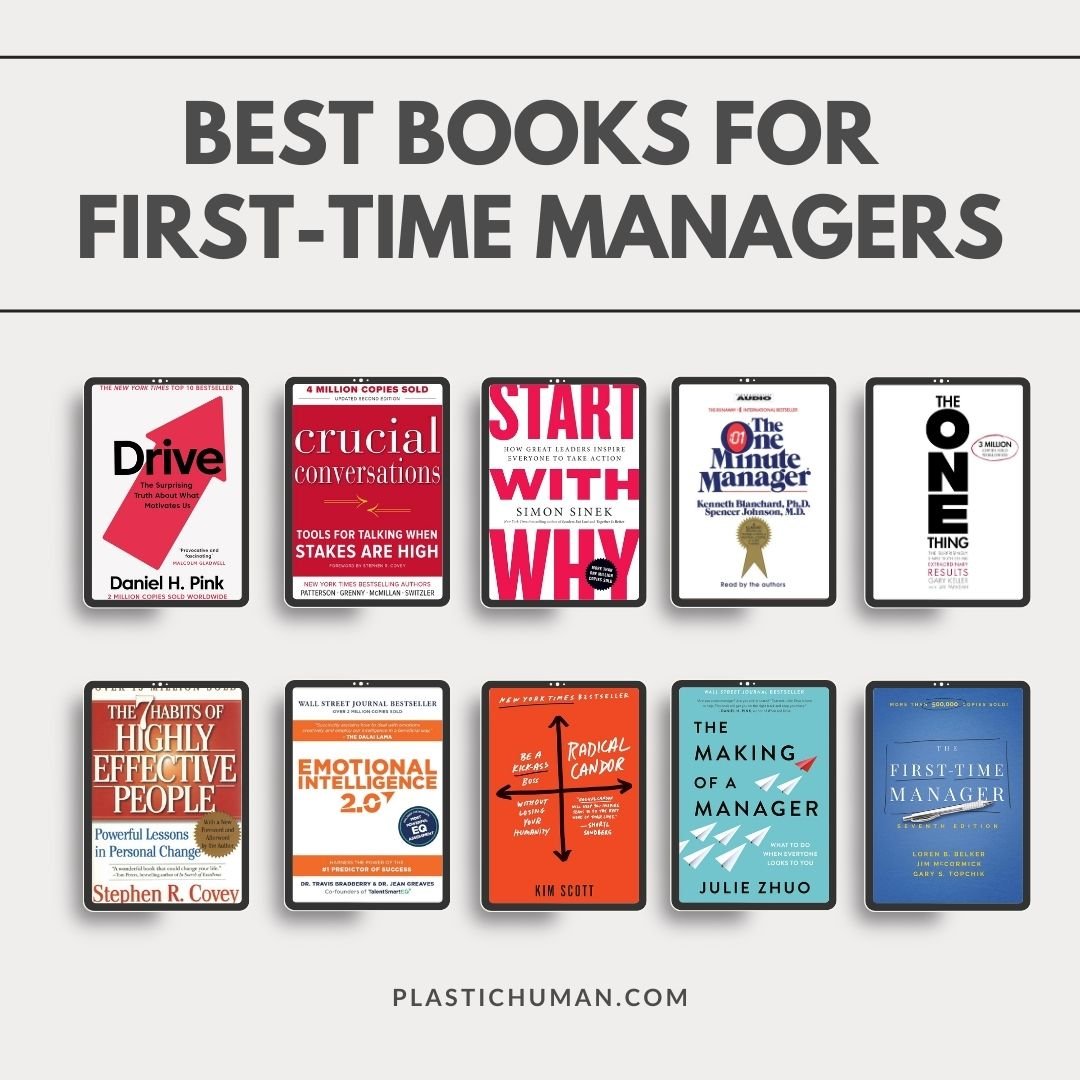
10 Best Books For First-Time Managers
Below are the best leadership books that’ll help you find your footing and flourish in your new role:
“The Making of a Manager: What to Do When Everyone Looks to You” by Julie Zhuo
Who else can show you the ropes other than the former VP of Design at Facebook, Julie Zhuo? In this book, Zhuo shared what it takes to become a good manager since she herself became one at the tender age of 25. You’ll find her writing style refreshingly honest and approachable.
Expect to learn:
- How to build trust with your team from day one
- Techniques for giving and receiving feedback effectively
- Strategies for making smart decisions under pressure
- Ways to create a team culture that brings out the best in everyone
“The First-Time Manager” by Jim McCormick
Jim McCormick is an experienced management consultant. In his book, Jim shows why he is an authority in the field of management and leadership. You’ll come across several practical advice and real-world examples that’ll simplify everything you need to do from the get-go.
Expect to learn:
- How to smoothly transition from being a team member to a team leader
- Strategies for communicating effectively at all times
- Time management and delegation skills
- How to handle difficult conversations and resolve conflicts
“Radical Candor: Be a Kick-Ass Boss Without Losing Your Humanity” by Kim Scott
With a title like that, you know you’re in for a treat! Kim Scott, a former executive at Google and Apple, is another authority when it comes to management. In this classic read, Kim discusses management and leadership from an entirely different but refreshing perspective. As a first-time manager, you want to show you’re up to the task by driving results. Meanwhile, you probably don’t want to sacrifice having a strong, authentic relationship with your team. If so, pick up this book to learn how to strike a balance between being approachable and maintaining authority.
Expect to learn:
- How to give feedback that’s both kind and clear
- Strategies for creating a culture of open communication
- Ways to avoid the pitfalls of overbearing or overly nice management styles
“The New One Minute Manager” by Ken Blanchard and Spencer Johnson
Don’t let the “one-minute” fool you this book is packed with timeless wisdom that has helped managers for decades. The book’s title is based on the premise that implementing three powerful management techniques in just a minute is enough to help you excel in your new role. This book is particularly perfect for busy new managers who need quick, effective strategies they can apply immediately.
You’ll learn about:
- One-minute goals: Setting clear objectives for your team
- One-minute praising: Catching people doing things right
- One-minute redirects: Addressing mistakes quickly and effectively
- How to adapt these techniques to modern workplace dynamics
“Drive: The Surprising Truth About What Motivates Us” by Daniel H. Pink
Daniel Pink is a bestselling author and business thinker. In this book, born from years of research work, Daniel seeks to call our attention to a new approach to motivating others. He calls on new managers to ditch the traditional carrot-and-stick motivation tactics. This book is packed with insights to help you create an environment where your team is intrinsically motivated to perform at their best.
You’ll learn about:
- The three elements of true motivation: autonomy, mastery, and purpose
- Why traditional rewards and punishments often don’t work (and can backfire)
- How to tap into your team’s internal drive
- Practical techniques for applying these motivational principles in your management style
“The 7 Habits of Highly Effective People” by Stephen R. Covey
This book has been known by every household for over three decades, and for good reason. It has been proven to be a great resource for personal and professional development. This book will benefit first-time managers greatly because it preaches living by clear principles, be it in your personal or professional life. By embracing these 7 habits (principles), you’ll basically be following a holistic framework that’ll make you a great manager and leader.
Expect to learn:
- How to be proactive and take responsibility for your life and career
- Techniques for prioritizing what’s truly important
- Strategies for effective communication and collaboration
- Ways to continuously improve and renew yourself as a leader
“Crucial Conversations: Tools for Talking When Stakes Are High” by Kerry Patterson, Joseph Grenny, Ron McMillan, and Al Switzler
We all find ourselves in some tricky situations from time to time. Well, those times are about to become more frequent as a new manager. But fear not, because that’s where “Crucial Conversations” comes in. You’ll find all the practical, step-by-step approaches you’ll need to handle high-stakes conversations.
Expect to learn:
- How to create a safe environment for honest dialogue
- Techniques for staying calm and productive when emotions run high
- Strategies for achieving mutual understanding and agreement
- Ways to turn crucial conversations into action and results
“The One Thing: The Surprisingly Simple Truth Behind Extraordinary Results” by Gary Keller and Jay Papasan
As a new manager, you might feel like you need to be everywhere and do everything. Well, this book tells you to breathe, focus, and prioritize. “The One Thing” offers invaluable lessons for first-time managers on how to be productive and accomplish extraordinary results.
Expect to learn:
- How to cut through the clutter and focus on what truly matters
- Techniques for setting and achieving your most important goals
- Strategies for improving your personal and professional life through focused effort
- Ways to help your team become more productive and successful
“Emotional Intelligence 2.0” by Travis Bradberry and Jean Greaves
IQ might get you the manager’s job, but EQ (emotional intelligence) is what’ll help you excel at it. In this book, Travis and Jean will show you exactly why emotional intelligence is a crucial skill for any manager. They also provided a practical guide to help you understand and improve your emotional intelligence.
You’ll learn about:
- The four core skills of emotional intelligence
- Techniques for improving your self-awareness and self-management
- Strategies for improving your social awareness and relationship management
- Ways to apply emotional intelligence in your day-to-day management tasks
“Start with Why: How Great Leaders Inspire Everyone to Take Action” by Simon Sinek
Last but certainly not least, we have Simon Sinek’s “Start with Why.” This influential book has reshaped people’s beliefs on leadership and motivation over the years. As a first-time manager, it’s imperative you understand the ‘why’ behind what you and your team do. This shows you know what you’re doing, which creates a sense of purpose. Consequently, your sense of purpose will motivate your team and drive success.
Expect to learn:
- How to articulate your team’s purpose and inspire others
- Techniques for making decisions that align with your core values
- Strategies for building trust and loyalty within your team
- Ways to create a work environment where people feel fulfilled and motivated

How To Be A Good First-Time Manager: Tried and True Tips
Now that I’ve armed you with a solid reading list, let’s touch on some practical tips to help you hit the ground running as a first-time manager.
Listen more than you speak.
Many new managers feel they’re expected to provide answers to everything. Well, that’s not true, because no man is an island of knowledge. You’re a fellow human like the rest of your team. So, take a pause to listen attentively to what others have to say. Also, make a conscious effort not to interrupt when others are speaking. You never know, innovative ideas and suggestions that’ll send your team to the moon can spring up just by actively listening.
Set clear expectations.
A team of confused and purposeless individuals makes a below-par team. To prevent this, state in clear terms what’s expected of each individual plus the team’s overall goals. Use the SMART framework for goal-setting. That means goals should be specific, measurable, achievable, relevant, and time-bound. But don’t just stop at setting expectations. Be sure to review and update expectations with changing times and demands. And, of course, keep your team informed of any changes.
Lead by example.
As a manager, your actions speak louder than your words. You’re now the focal point for your team. So, know that they’ll look to you to set the tone for work ethic, communication style, and professional behavior. But that’s not all. As I mentioned earlier, you’re human too. Humans make mistakes. But when you do make an error, own up to it. This shows your team that it’s okay to be imperfect and encourages a culture of accountability.
Provide regular feedback.
The norm is to see managers bossing over their team members, no thanks to the one-way feedback system. Well, to facilitate true growth and improvement in today’s business space, a two-way feedback system is important. As a manager, it’s your responsibility to provide both positive reinforcement and constructive criticism to help your team members develop. But don’t stop there. Ask for feedback on your own performance and management style. This shows you’re open to improvement and value your team’s input.
Invest in your team’s development.
As a manager, you’re expected to help your team members grow and develop their skills. That means identifying your team’s individual strengths and areas for improvement. Then, organize regular training sessions or workshops for them. This not only benefits them personally but also makes your team much better.
The path to great leadership is a marathon, not a sprint. So, keep learning, keep growing, and keep leading.
Stepping into a managerial role for the first time is a thrilling yet challenging journey. Fortunately, you can equip yourself with everything you’ll need by maximizing these game-changing books and practical tips.
But hey, don’t let your learning journey end here! If you’re hungry for more insights, head over to my blog for more insights on leadership, career advancement, and so much more. I’m constantly updating it with fresh, actionable content to help you become a better manager and leader. For a taste, check this one out: “Why Do Organizations Need Leader-Managers?“
And if you’re a podcast person, tune into my weekly episodes, where we dissect leadership topics with industry experts and thought leaders. See you there!