

Every business has its secret sauce. Whether it’s your innovative product designs, strategic plans, or client databases, these trade secrets are what set you apart from the competition. But here’s the thing in today’s interconnected workplace, confidential information faces more threats than ever before. From accidental email forwards to sophisticated cyberattacks, the ways unauthorized individuals can gain access to sensitive data seem endless.
And it’s not just about protecting your business strategies. Think about the personal information you handle daily employee records, client data, and financial details. Each piece of information represents a trust that’s been placed in your organization, and breaking that trust can have serious consequences.
That’s why I’ve put together this comprehensive guide on how to effectively keep information confidential in the workplace.
How to Keep Information Confidential in the Workplace
In this comprehensive guide, you’ll discover practical, actionable strategies that go beyond the basic “lock your computer” advice. We’ll explore proven methods to protect workplace information that you can implement immediately, whether you’re working from the office or learning how to manage remote employees.
By the time you finish reading this guide, you’ll understand not just the “what” but the “how” of information security. We’ll break down everything you need to know concerning how to protect confidential information into digestible, easy-to-follow steps that will help you and your team prevent unauthorized access to important company data. Plus, you’ll learn how to create a culture of confidentiality within the workplace, empowering your team to prioritize security and make informed decisions to safeguard sensitive information.
Why is it Important to Protect Confidential Information in the Workplace?
Here’s why protecting sensitive information matters more than ever:
First, your company’s competitive advantage often lies in its trade secrets unique processes, customer lists, marketing strategies, and innovative ideas. When these fall into the wrong hands, your organization’s market position could be compromised. Imagine spending years developing a groundbreaking product, only to have competitors access your research before launch.
Beyond business strategies, there’s a human element to consider. Your employees trust you with their personal information, from social security numbers to health records. When you protect confidential information effectively, you’re not just following regulations you’re demonstrating respect for your team’s privacy and building a foundation of trust and workplace cooperation.
Moreover, in many industries, you’re legally obligated to protect sensitive data. Failing to do so can result in hefty fines, legal battles, and damaged reputations. Many clients and partners will require you to sign a non-disclosure agreement or other confidentiality agreement before sharing valuable information. Breaking these disclosure agreements doesn’t just harm relationships or incite unconscious biases it can have serious legal and financial consequences.
Finally, in our increasingly digital world, data breaches can happen in an instant but have lasting repercussions. A single leaked document or mishandled piece of confidential information can lead to identity theft, financial fraud, or competitive disadvantage. The cost of preventing unauthorized access is far less than the price of dealing with a breach after it occurs.
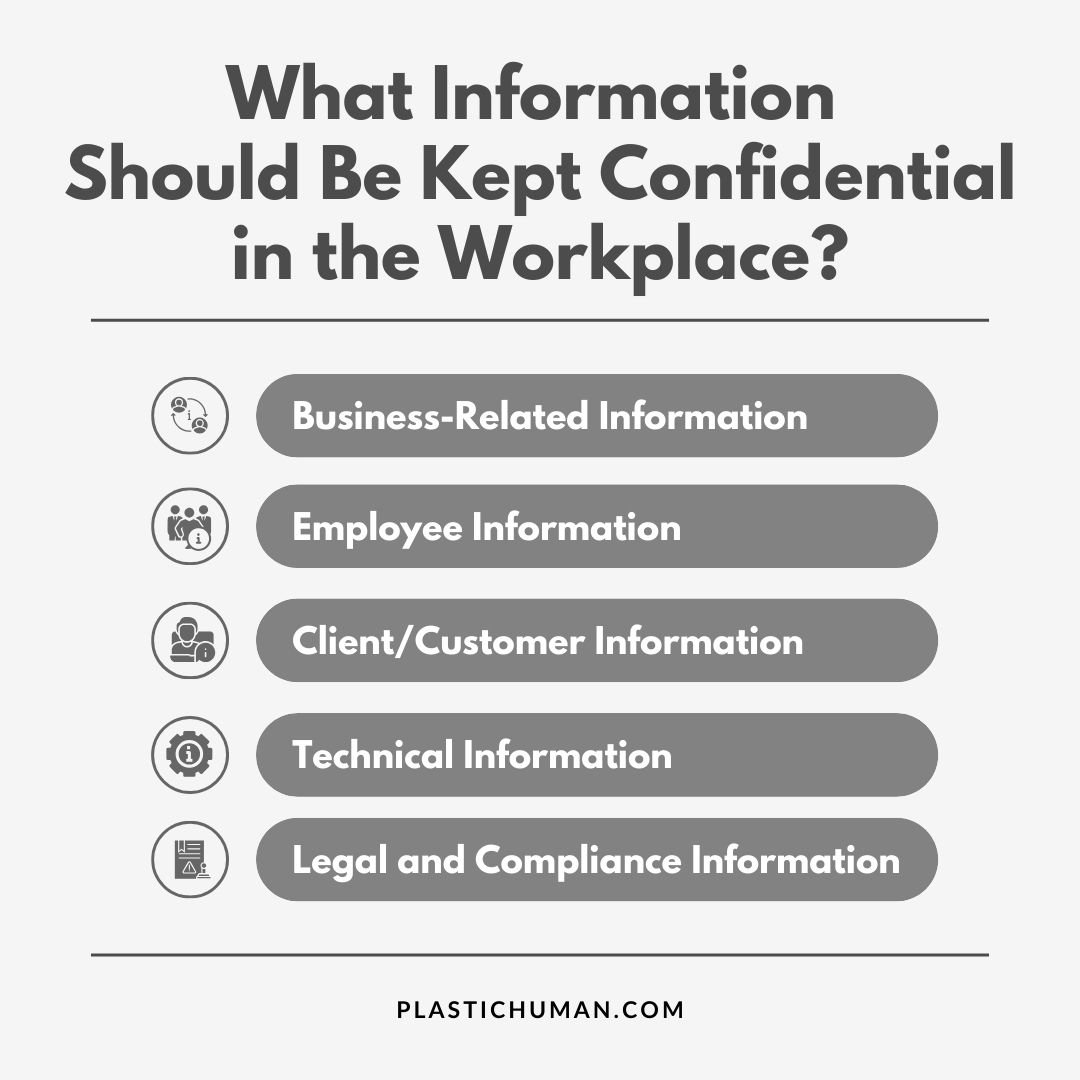
What Information Should Be Kept Confidential in the Workplace?
In any workplace, certain types of information require special protection to maintain privacy, security, and competitive advantage. Here’s a list of some key information you should treat as confidential:
Business-Related Information:
- Trade secrets, including proprietary processes and formulas
- Business strategies and future plans
- Financial records and forecasts
- Client lists and customer databases
- Unpublished product designs and development plans
Employee Information:
- Social security numbers and tax information
- Medical records and health information
- Personal email addresses and contact details
- Background check results
- Family and emergency contact information
Client/Customer Information:
- Personal identification details
- Credit card and banking information
- Contract terms and agreements
- Credit ratings and financial status
- Contact information and addresses
Technical Information:
- Network security details and passwords
- Software source codes and algorithms
- Research and development data
- Security protocols and procedures
- Access control information
Legal and Compliance Information:
- Confidentiality agreements
- Non-disclosure agreements
- Pending legal actions
- Patent applications and intellectual property
- Settlement agreements
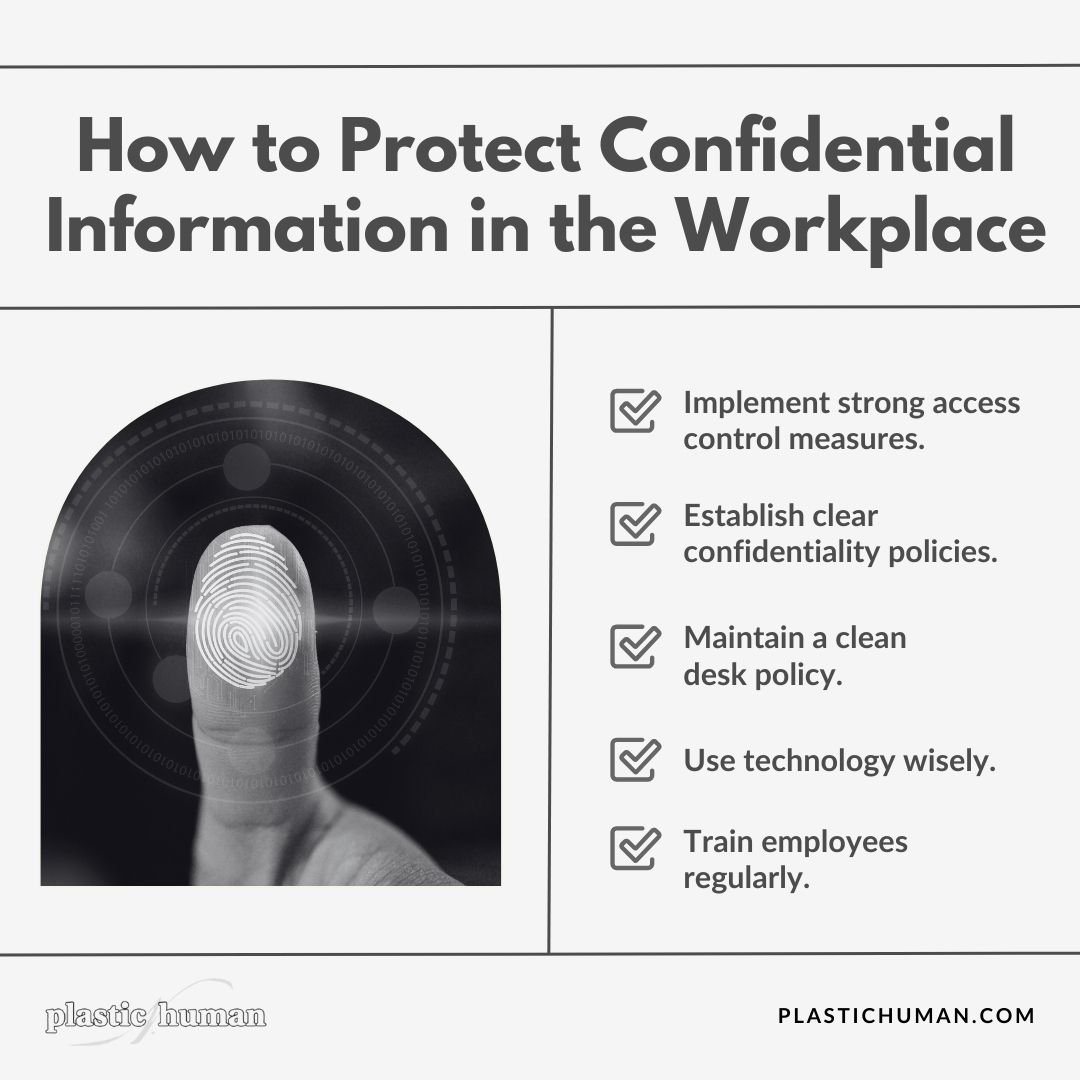
How to Protect Confidential Information in the Workplace
Here are proven strategies that will help safeguard your workplace information and prevent unauthorized access to valuable data.
Implement strong access control measures.
Gone are the days when a simple lock and key were enough to protect confidential documents. Today’s access control needs to be sophisticated yet user-friendly. Start by implementing role-based access only give employees access to confidential information they absolutely need for their jobs. Use strong authentication methods, including complex passwords and two-factor authentication. Consider using access cards or biometric systems for physical areas containing sensitive materials.
For digital assets, maintain detailed logs of who accesses what and when. Regular audits of these access logs can help you spot unusual patterns or potential security breaches before they become major issues.
Establish clear confidentiality policies.
Having employees sign a non-disclosure agreement is just the beginning. Create comprehensive, easy-to-understand confidentiality policies that clearly outline what constitutes confidential information and how to handle sensitive data. You should also clearly state the consequences of disclosing confidential information, as well as procedures for reporting potential breaches.
Make these policies part of your onboarding process and conduct regular refresher training sessions. This is especially crucial when learning how to manage remote employees who might be handling sensitive data from home.
Maintain a clean desk policy.
A clean desk policy might seem old-school, but it’s remarkably effective. Train employees to lock away confidential documents when not in use. They should also properly dispose of sensitive materials using shredders. Employees must learn to never leave trade secrets or personal information visible on their desks. All sticky notes with passwords or sensitive information must be kept out of sight.
Use technology wisely.
It’s no news the world has gone digital thanks to recent technological developments. People can now access information from anywhere. Ergo, you should also leverage technology to protect sensitive information. You can achieve this by installing and regularly updating antivirus software. Use firewalls and encryption tools as additional means of securing your digital information. Don’t forget to also back up all digital data. You may want to leverage cloud storage solutions here.
Train employees regularly.
Even with a robust data-protection system in place, it only takes one “I didn’t know” moment from an untrained or greenhorn employee to bring everything crashing down. Therefore, it’s vital to conduct proper orientation and training programs for your employees on a regular basis. Knowledge is your best defense against information breaches. So, educate them on the best practices for information security, plus how to identify and properly handle sensitive information. When structuring your training program, you should ensure that it also includes information about any current security threats, the most up-to-date security risks, and the methods to prevent them.
Keeping confidential information secure is about protecting your organization’s future, your employees’ trust, and your clients’ confidence.
Nevertheless, every person in the workplace, from top to bottom, plays a vital role in maintaining confidentiality. It could be by maintaining a clean desk, being mindful of how we handle sensitive information, or following proper data protection protocols. All these small daily actions add up to create a robust security culture.
Want to stay ahead of the curve when it comes to workplace security and professional development? Then you should subscribe to our weekly blog and podcast NOW! You’ll get exclusive insights on the latest trends in information security, effective management, professional development strategies, valuable leadership advice, and lots more. See you there!