

Workplaces are basically adult daycare centers where people from different backgrounds and personalities have to coexist for eight hours a day. And since we’re all humans, disagreements are bound to happen. When you squeeze different humans into shared spaces and bombard them with deadlines and expectations, tension isn’t just possible it’s practically guaranteed.
The thing is, most workplace conflicts often start small. It could be a snarky email or a missed deadline. The ball may even be set rolling by that one colleague who always “accidentally” takes credit for your work. So, when you add the tight deadlines, stress, and some other factors, these “normal” disagreements can easily get out of hand. What started as a simple verbal altercation can quickly escalate into a full-blown physical confrontation.
That’s why, today, I’m dedicating this post to talk about what you should know about fights in the workplace!

Fighting in the Workplace: Everything You Need to Know
Not all workplace disagreements or conflicts stay civil. Sometimes, professional courtesy goes out the window very quickly when you’re under a lot of pressure. You don’t want this to be a common occurrence in your company. That goes for both owners, managers, and even employees!
And that’s exactly why you should keep reading for a full understanding of why fighting at work is not palatable and how to prevent it from happening. We’ll also touch on practical strategies to professionally and effectively handle any conflict, should it occur.
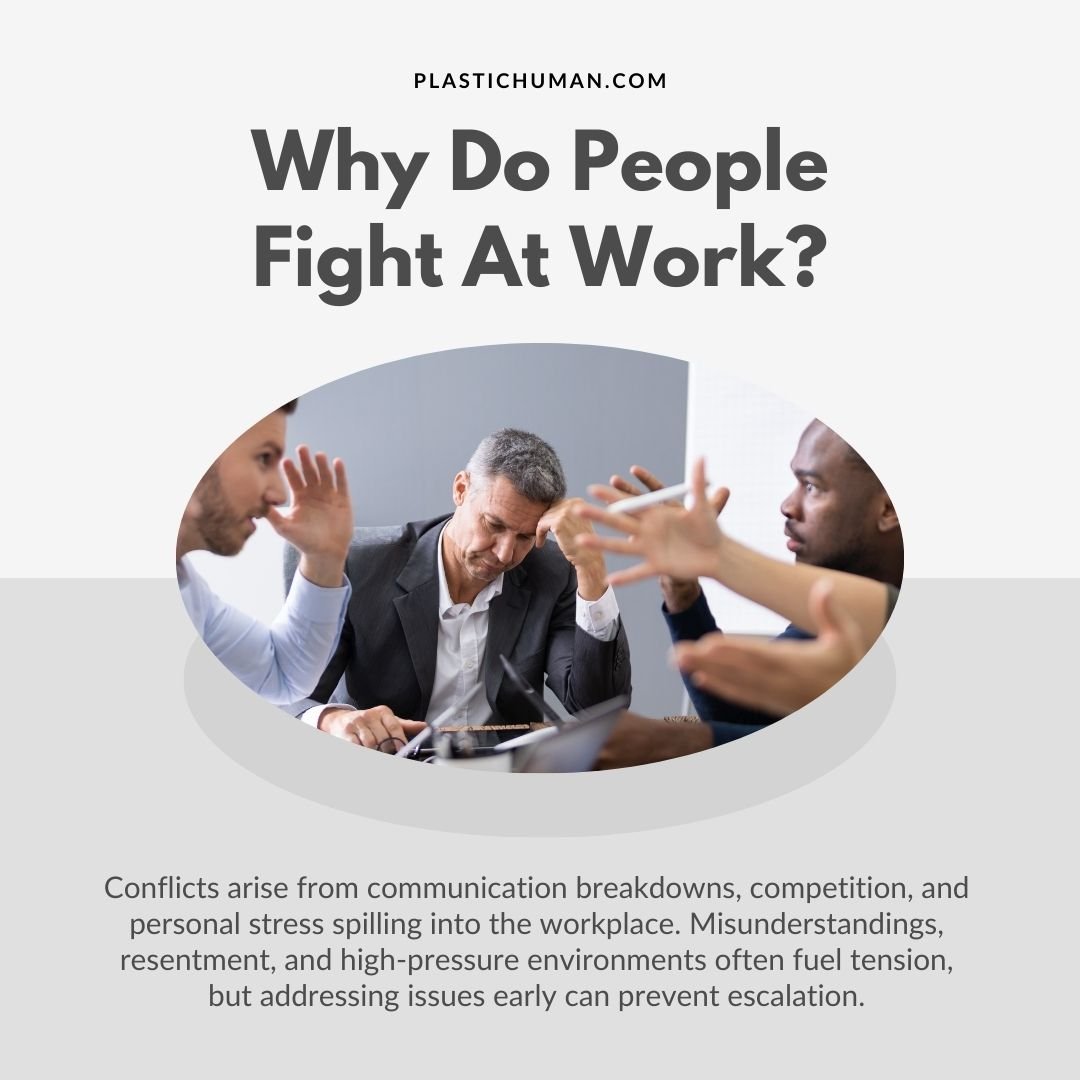
Why Do People Fight At Work?
Like I said, we’re all humans, and no human is infallible. So, having disagreements can’t really be helped. What, however, can be helped is what we do after. Do you let your disagreements fester into derailing verbal or physical altercations? Or do you try to understand why you’re fighting at work in the first place and nip it in the bud before it gets out of hand?
One of the major causes of conflicts in the workplace is communication breakdowns. Lack of proper communication and information flow is a slippery slope that businesses must avoid at all costs. When messages are constantly getting mangled up, emotions are bound to run high. Misunderstandings, unconscious bias, and ill-conceived assumptions may creep in. And before you know it, two colleagues are ready to settle scores.
Performance pressures are another factor that can cause workplace conflicts. When promotions are on the line, competition gets fierce. That colleague who always seems one step ahead might suddenly become the target of simmering resentment. Some workers who have been nursing feelings of being undervalued, overlooked, or continuously passed over can also lose it at the slightest provocation.
But then, life is not just about work. Life outside work also has a way of creeping into workplace dynamics and causing unhealthy uproar. Personal stress and external pressures are tasking on their own. So, when you add complex power dynamics, high-pressure work environments, and unrealistic deadlines, it’s like sitting on a keg of gunpowder.
What Happens When Two Employees Fight At Work?
There’s no two ways about this–fights among employees can do a lot of damage to the company. When workplace fights break out, it’s like dropping an emotional bomb in a professional ecosystem. The fallout isn’t just about two individuals it impacts the entire organizational climate.
Colleagues suddenly become uncomfortable, walking on eggshells. As a result, productivity often takes a nosedive, and the once-collaborative environment transforms into a workplace of unspoken tensions. So, it’s not just about the fight itself it’s about the lasting emotional imprint it leaves on everyone else.
Can An Employee Be Fired For Fighting At Work?
Fighting at work is a one-way ticket to potentially getting fired. That’s because most companies have crystal-clear zero-tolerance policies for physical altercations, which have legal backing. While the specific consequences might vary, the message is consistent. They all want a professional working environment with no room for physical confrontations.
However, while termination may be the most likely outcome, it’s not always the only option. Depending on the severity, companies might decide to go through the route of lengthy suspensions or mandatory conflict resolution training.
How to Handle Employees Fighting in the Workplace
As a manager, team leader, or HR professional, how do you handle employees fighting in the workplace? Let’s uncover it together:
Establish Clear Workplace Conduct Policies
Policies aren’t just dusty documents gathering cobwebs in the HR filing cabinet. They’re your first line of defense against workplace chaos. A well-crafted conduct policy is like a roadmap that guides employee behavior, setting crystal-clear expectations from day one. When employees know exactly what’s expected, they’re more likely to self-regulate.
Your policy should explicitly outline:
- Acceptable communication standards
- Consequences of inappropriate behavior
- Reporting mechanisms for conflicts
- Zero-tolerance guidelines for physical and verbal aggression
Implement Immediate Intervention Protocols
Waiting is not an option when tensions escalate. Immediate, strategic intervention can transform a potential disaster into a manageable situation. Your intervention strategy should be swift, neutral, and focused on de-escalation.
The key is training. Not just for managers, but for all employees. Create a workplace culture where:
- Anyone can recognize early warning signs of conflict.
- Multiple team members know how to step in professionally.
- There’s a clear chain of communication during tense moments
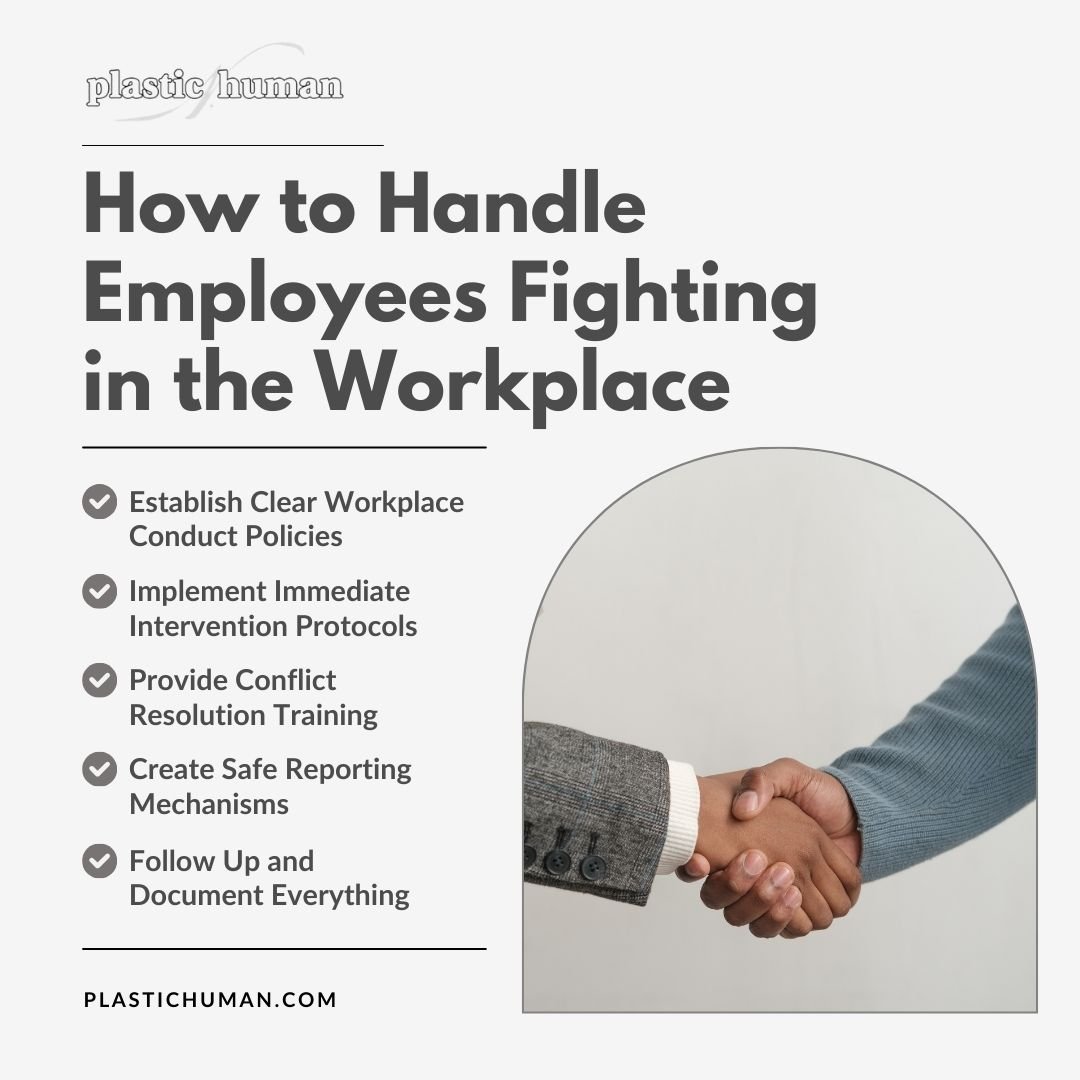
Provide Conflict Resolution Training
Conflict resolution isn’t a natural skill it’s a learned art. Most people enter the workplace without understanding how to navigate complex interpersonal dynamics. That’s why targeted training is crucial. Better still, this training can’t be a one-time, check-the-box exercise. It needs to be an ongoing, evolving program that grows with your organization.
Effective conflict resolution training should cover:
- Active listening techniques
- Emotional intelligence development
- Communication strategies
- Negotiation skills
- Stress management
Create Safe Reporting Mechanisms
Silence is the enemy of resolution. Employees need multiple, confidential channels to report workplace tensions before they explode into full-blown conflicts. When employees feel safe sharing their concerns, you prevent minor issues from becoming major confrontations.
Your reporting mechanism should be:
- Completely confidential
- Accessible through multiple channels (online, in-person, anonymous hotline)
- Free from potential retaliation
- Handled with utmost professionalism
Follow Up and Document Everything
The fight might be over, but your work has just begun. Comprehensive documentation and follow-up are crucial in managing workplace conflicts. Each documented incident becomes a learning opportunity for preventing future tensions.
Documentation should include:
- Detailed incident reports
- Witness statements
- Action plans
- Follow-up meetings
- Progress tracking
Workplace conflicts are inevitable, but they don’t have to be destructive.
The difference between a toxic workplace and a thriving one often comes down to how we handle those moments of tension. So, always remember that you’re not just an employee or a manager. You’re a professional relationship architect, constantly building, maintaining, and sometimes reconstructing the bridges between people. Thus, every conflict is an opportunity for growth, understanding, and creating stronger, more resilient teams.
Hungry for more career-transforming insights and professional development content? Follow my blog and podcast for regular insights and hacks for career and personal growth, leadership skills development, and more. You’ll also find out exactly how to resolve conflict between manager and employee. See you at the top of your professional game!