

Success: it’s one of those words that packs a punch. It means something different to everyone some see it in numbers, others in impact, or even personal growth and work-life balance. But when it comes to the workplace, measuring success is more than a personal reflection; it’s a powerful way to understand your team’s performance and the company’s direction.
Whether you’re managing a team, climbing the ladder, or steering a startup, understanding how to define success in a work setting is key. So today, we’re diving into the most effective ways to gauge success at work, helping you unlock insights and stay on course toward whatever goals drive you!

How to Measure Success in the Workplace
In today’s fast-paced business world, staying on top of your team’s performance and the company’s bottom line is essential if you don’t keep an eye on success metrics, it’s easy to fall behind. By defining and consistently measuring workplace success, you’ll gain a clear picture of what’s working and what could be improved, whether it’s on an individual level or across leadership.
Whether you’re a manager looking to assess your team’s progress or a professional interested in tracking your own growth, this guide will walk you through practical ways to measure success using different approaches and key performance metrics. By the end, you’ll be armed with insights to make your work not only impactful but measurable keeping your journey meaningful both now and for the long run!
Why is it Important to Measure Success in the Workplace?
Success metrics have a dual purpose. It acts as a compass, guiding both individuals and organizations toward their targets. Companies that put robust success measurement systems in place get actionable insights and make sure they are heading toward revenue growth. Without measuring success, you’re essentially driving blindfolded, hoping to reach your destination.
The more you measure your workplace success, the more the influence it will have on employee engagement and motivation. When team members can see their progress and understand how their work contributes to larger organizational goals and objectives, they become more invested in their roles. This heightened engagement naturally leads to improved performance and job satisfaction, creating a positive cycle of growth and achievement. Harvard Business Review also reports that companies with highly engaged staff outperform firms with mostly disengaged folks.
Quantifying success also results in more informed decision-making and resource allocation. By using performance metrics, organizations can determine which activities are working and what they need to fine-tune. This data-driven approach eliminates guesswork from strategic planning and enables companies to use their resources more efficiently. For example, if data shows that specific training programs dramatically enhance employee performance, companies are more confident to spend more on these developmental opportunities.
Plus, success measurement can also help connect the dots between personal success and company goals. It paints a picture of mutual success and why everyone’s efforts count. This connection is especially important in our current (and likely future) remote and hybrid work environments, where finding the “why” can be difficult to maintain. As such, knowing how to manage remote employees is bound to become increasingly important.
How Do You Measure Success in the Workplace?
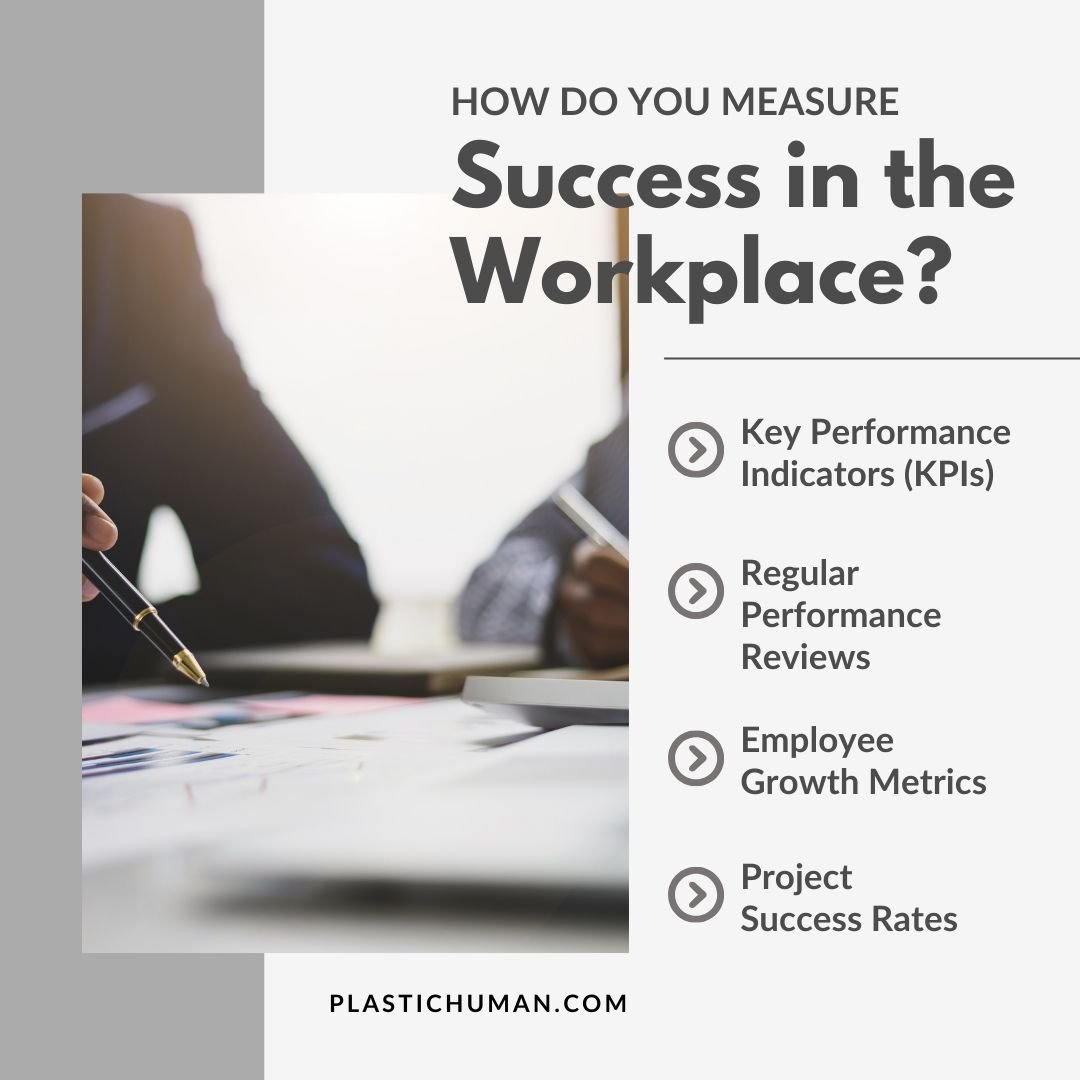
Below are some proven strategies that can help track, measure, and bring a deeper understanding of workplace success:
Key Performance Indicators (KPIs)
KPIs are the backbone of performance management in almost all successful organizations. By quantifying objectives, we are able to set measurable goals and assess if everything is moving as it should. KPIs are great because they can be customized for any role or department and provide objective, easy-to-measure outcomes.
To get started, carefully select performance metrics that truly matter to your organization’s goals. For sales teams, this can be conversion rates and revenue targets. For customer service, this might mean how quickly you respond and what your satisfaction scores are. Just a quick reminder: whichever KPIs you settle for should be SMART. That means it should be specific, measurable, achievable, relevant, and time-bound.
Another important thing to note is to only roll out KPIs that you can actually measure reliably. You need to consider the frequency of measurement too. Some KPIs need to be measured daily, while others are quarterly. Also, be cautious of the law of unintended consequences. For instance, if you only focus on quantity-based KPIs, you may end up compromising quality.
Regular Performance Reviews
Performance reviews are crucial checkpoints in measuring individual and team success. These are more comprehensive and qualitative than KPIs because they assess how the employees have performed in terms of contributions and growth. Modern-day performance reviews are no longer a once-a-year event. Rather, they’ve become a continuous dialogue about progress and development.
When conducting performance reviews, create a framework that’s versatile enough to effectively measure hard and soft skills. Incorporate self-assessment elements to prompt workers’ introspection and own their development. You can also have a well-rounded evaluation by implementing a 360-degree employee feedback system where you get input from peers, employees, and your immediate superiors.
Invest in training managers on being good mentors and how to roll out effective performance review systems. They should make the process transparent and ensure there’s a balance between constructive criticism and recognition of achievements. Remember that the goal is to foster growth, not create anxiety. You can find out more on what mentoring in the workplace is here.
Employee Growth Metrics
Monitoring the growth of your employees reveals a great deal about both individual achievements and your firm’s current standing. This strategy helps measure professional development, skill growth, and career progression. It’s also a good way to identify potential leaders among your workforce and always keep your workforce in tune with present industry needs.
One way to do this is by developing individual development plans (IDPs) and monitoring IDP progress. Ensure that training programs are completed and new certifications are gained and applied in real projects. You can also leverage competency matrices to map out organization-specific skill development and its applications across different roles and levels.
Project Success Rates
Measuring project outcomes is another way to get tangible proof of team and corporate success. This approach considers how efficient project delivery is, plus how such completed projects impact business objectives. It helps the management identify strong performers and processes that could use improvement.
Metrics used may include project completion rates, budget adherence, timeline accuracy, and post-implementation success. Evaluate both quantitative measures (e.g., Return on Investments) and qualitative aspects (like stakeholder satisfaction). You can also use project post-mortems to gain information on what went right and wrong.
However, make sure your systems are not just keeping track of project metrics alone. Rather, ensure it captures team member contributions as well. And most importantly, consider how you’ll handle factors outside the team’s control that might impact project success.
Understanding and effectively measuring workplace success is crucial for any organization’s growth and sustainability.
Whether it’s tracking KPIs or monitoring employee growth, these strategies provide valuable insights that can inform your decision-making and foster a culture of continuous improvement. The trick, of course, is not simply tracking success but using these insights to build something meaningful and beneficial for your workplace!
Start your journey towards a more successful, metrics-driven workplace culture today! Then, check out my blog and podcast for regular updates on leadership, performance management, and organizational development. You’ll also find lots of expert tips on building high-performing teams and fostering a growth mindset. As well as some top book recommendations like the 10 Best Business Management Books To Read and so much more! See you there!