

Managers and leaders are two titles that often get used interchangeably. But let me tell you this: they are in fact very different. Anyone can be a manager. After all, I’ve ‘managed’ some projects, teams, and even my own house chores from time to time. But being a true leader? That’s a different ball game entirely!
See, being a leader is not all that easy. It takes something special to effectively lead people. There’s so much more to being a leader than just assigning tasks, enforcing policies, and watching the clock. Leadership is about inspiring people, employee engagement, empowering them, and guiding them to reach heights they never thought possible.
Yes, not all are blessed with that natural charisma that some great leaders radiate. But that doesn’t mean you can’t be one yourself. It takes sharpening developing certain management and leadership skills to transform an everyday manager into an extraordinary leader.
So today, I’ll be showing you the exact things you need to work on to go from being just a “boss” to becoming a leader people will eagerly follow!

Here’s Exactly How Managers Become Leaders
Every organization loves to see top managers go on to become great leaders. Who wouldn’t? They are like the best of both worlds (managerial and leadership). These individuals are outstanding strategic planners and possess good people management skills. They also have a penchant for inspiring everyone around them. So, if you’ve ever wondered why organizations need leader-managers? Now you know why!
However, to achieve such esteemed leadership status, there is a need for a radical change in mindset. You must outgrow any existing task-oriented, top-down mindset. Instead, you should focus more on empowering, guiding, and uplifting your team. Effective leaders don’t just assign tasks; they also give constructive feedback and foster an environment where everyone can thrive.
In the end, becoming a manager-turned-leader is not just a personal achievement. It’s also a win for the entire team and the company itself. Under great leaders, employees feel appreciated, motivated, and willing to go the extra mile. Consequently, productivity soars, morale skyrockets, and the organization evolves at a rate that rivals can only envy.
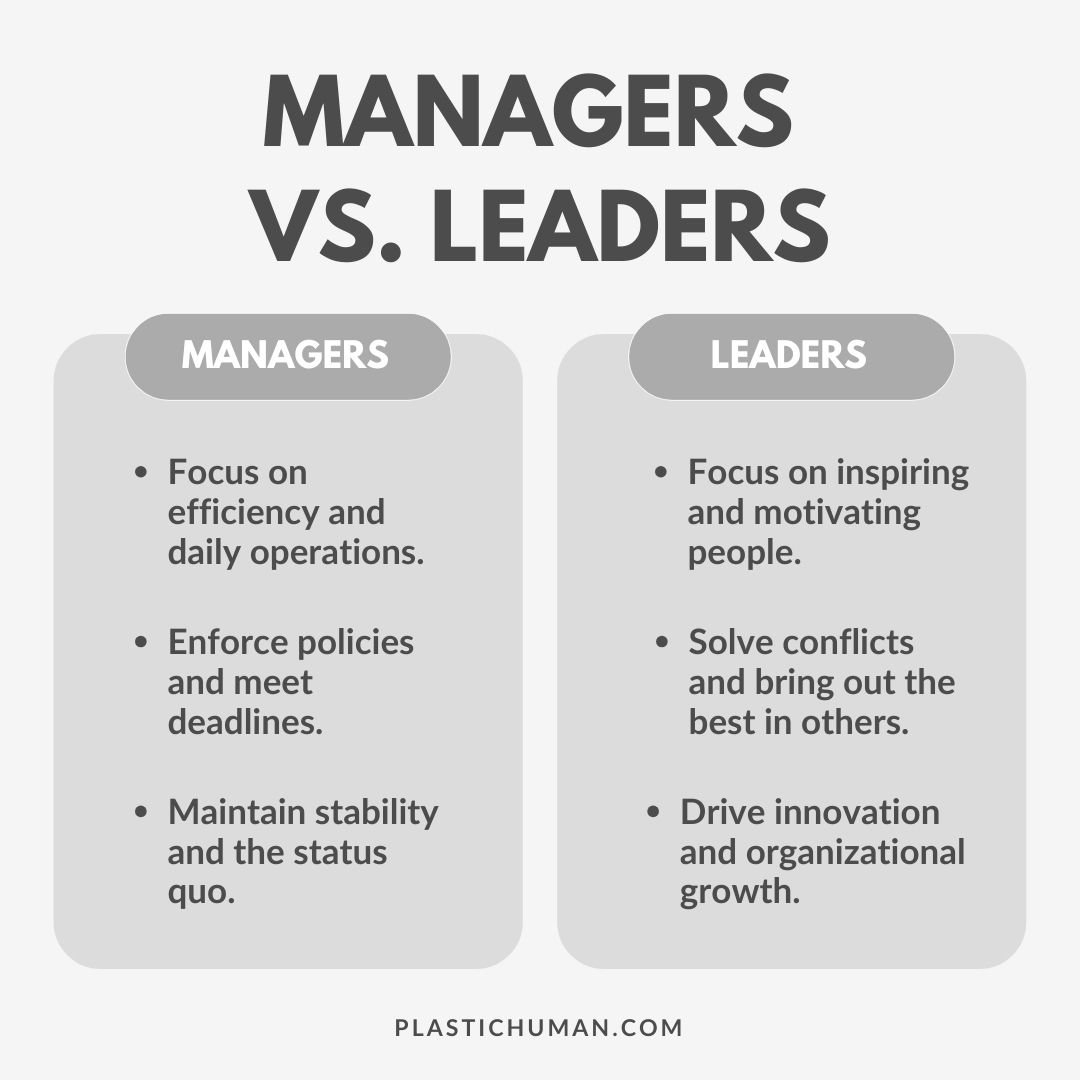
What Is The Difference Between Managers and Leaders?
At first glance, one may feel that a manager and a leader are some key distinctions between the two.
Managers are focused on the smooth running of the organization. They’re usually involved in day-to-day operational roles like enforcing policies, meeting deadlines, and ensuring tasks are completed efficiently. Leaders, on the other hand, are more people-oriented.
While other people simply bark orders, leaders know the value of inspiring and motivating their teams. They are conflict solvers; they calm the storm and help bring out the best in everyone.
Managers are often content with maintaining the status quo. Leaders, on the other hand, leaders are always on the lookout for new ways to improve, innovate, and advance the company.
However, note that managers are equally important figures in an organization. As such, having a healthy balance of both managers and leaders is the blueprint for most successful businesses. Managers will ensure the business train runs on time, while leaders will ensure everyone gets aboard the train with great enthusiasm about a shared common goal.
How Managers Become Great Leaders
Becoming is a process of learning new skills, new behaviors, and new ways of thinking. Therefore, by adhering to the following principles, any manager can become a real leader:
Cultivate Self-Awareness
Leadership requires knowing who you are, i.e., being self-aware. Effective leaders are in tune with their nature. They know their strengths, weaknesses, biases, and triggers. This understanding helps in successfully managing their emotions at all times, even in the face of criticism. They also have clarity of mind, make objective decisions, and accept feedback gracefully. A leader who knows himself is more likely to understand and empathize with his team.
Shift from Controlling to Enabling
Unfortunately, many managers tend to become control freaks. They want to control everything, down to the last detail. However, effective leaders know it’s their duty to unlock their subordinates’ potential and not micromanage them. So, if you want to be a great leader, you’ll need to put a stop to such tendencies.
Instead, delegate tasks strategically and give your team the freedom to do things their own way. Also, be prepared to provide support when needed. Fostering this sense of ownership and accountability will relieve your workload as the leader and help your team members grow and develop.
Connect on a Human Level
Successful modern leaders understand just how crucial it is to have real human connections. They try to know and treat their subordinates as individuals, not mere employees. They celebrate achievements and provide support when hard times come. This helps build trust and team spirit. When you make people feel like they are seen, heard, and appreciated, they will be more willing to step it up. This inclusivity notion is backed up by a recent study by Havard Business Review.

Communicate Clearly
Effective communication is the medium through which effective leadership is delivered. You must be able to communicate the vision, strategy, and expectations with surgical accuracy. Only you can make them see the big picture. But, you must also know how to actively listen to your team members!
When you really listen to their plight, concerns, and suggestions, you will even understand the unspoken words. This builds trust and shows you really care about your team’s welfare. Another recent study even revealed that clear communication results in increased output, better client satisfaction, plus a boost in employees confidence.
Embrace a Coaching Mindset
The best leaders don’t guide their subordinates by providing all the answers, but by coaching. They ask relevant questions, provide tailored feedback, and empower their team members to find solutions to the challenges on their own. Doing this fosters autonomy, problem-solving, and a growth mindset. Mind you, these are very important ingredients for grooming future leaders within an organization.
The path from manager to leader is a challenging but immensely rewarding one.
Transitioning from effective management to outstanding leadership is not always easy. It takes effort, courage, and the willingness to push past your boundaries. But the rewards are always worth it. Talk about your team coming to work with renewed passion each day, increased creativity, and the resultant sustainable success. So if you’re ready to take that next step towards becoming a great leader, use these principles. It will save your team and take the organization to the next level.
If you want more insights on personal development, leadership, and career progression, listen to my podcasts. In the ‘What’s A Plastic Human” episode, for instance, I shared my own experience of transitioning from a bland managerial figure into an impactful leader. You can check out my pick of the best books on leadership you must read for additional insights. You’ll find this and many other leadership-related posts on my blog. See you there!