

The internet and technology have transformed the traditional office model. Teams are no longer confined to a single location; they can now work across different time zones and countries, often from the comfort of their own homes. This change has created exciting opportunities for businesses, allowing them to tap into a global talent pool and offering employees better work-life balance.
However, not all leaders are ready for this shift. Managing a team in a physical office is one thing, but leading a remote team requires a different set of skills. The work-from-home model, especially popularized during COVID-19, is now a PERMANENT fixture, folks. It’s true!
As a manager, you might feel like you’re in a long-distance relationship, tasked with maintaining team cohesion and productivity through virtual means. This can be challenging without the right remote management strategies. But don’t worry, because in this guide, I’ll share tips on effectively managing remote employees to achieve your business goals from home.
10 Tips For Managing Remote Employees
Overseeing remote workers is far from being a picnic. It’s one of the most challenging tasks a leader can undertake in any organization. Not even the most experienced remote managers would deny this!
How does one build trust when you can’t even look into the other person’s eyes? How do you motivate workers who are probably feeling too relaxed in their homes? And, how can you build team spirit when the team is spread out like confetti? Even the gravity of messages may get lost when they are not delivered in person. And so on and so on!
Fortunately, there are ways to overcome the challenges of managing remote workers. In this post, I’ll be showing you how to tackle these challenges head-on. I’ll also arm you with practical tips to help your remote employees stay engaged and productive. Let’s dig in!
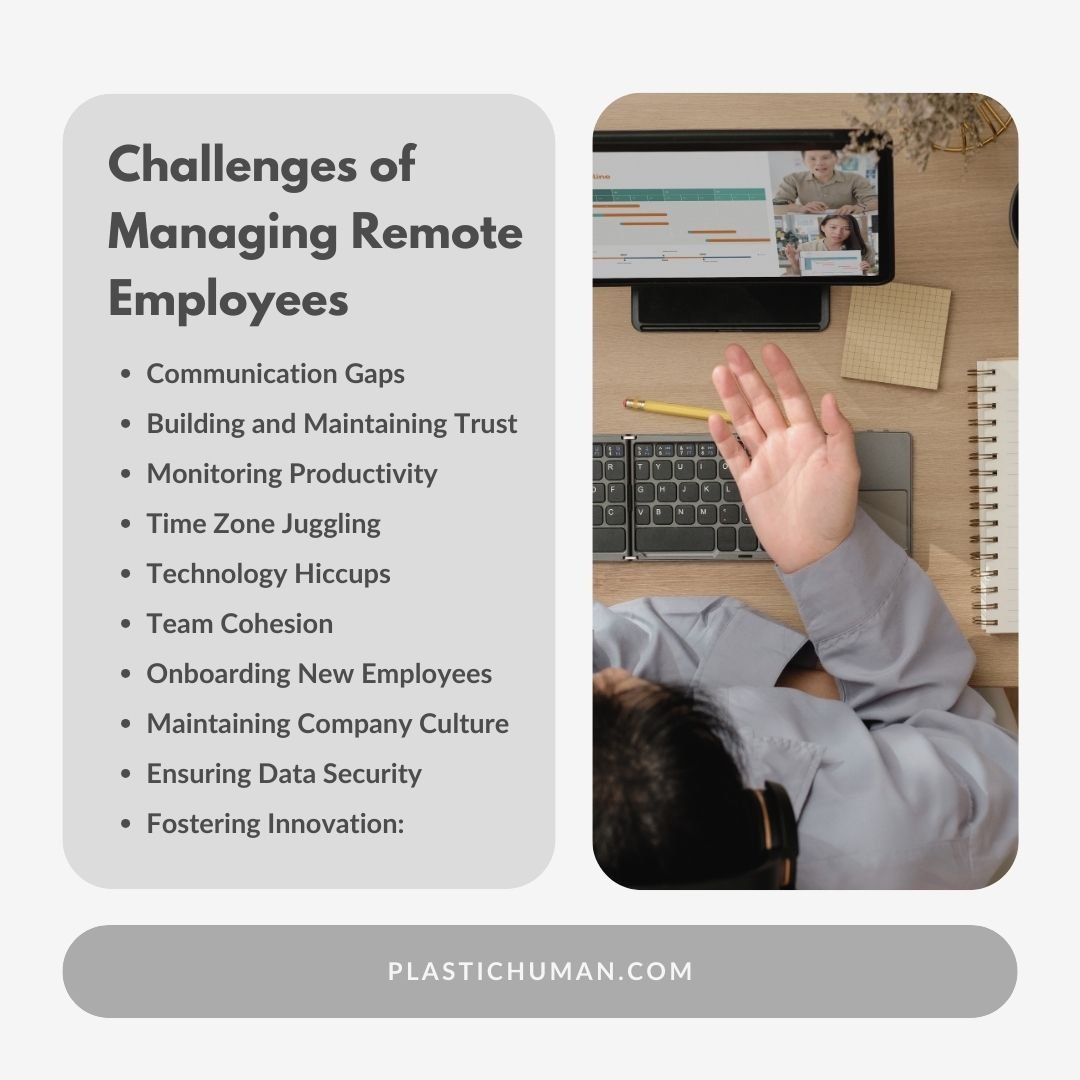
Challenges of Managing Remote Employees
Remote work means a real shift in a manager’s working style. However, it’s not just about mastering new technologies or figuring out how to use Zoom backgrounds. Rather, it’s about getting the best out of your team without losing the human touch to new technology.
Here’s a rundown of the major challenges that can make remote management quite tedious:
- Communication Gaps: Some of the more subtle aspects of communication, like the tone of the conversation, its intent, and even urgency, can easily be lost when using text or even email.
- Building and Maintaining Trust: It’s more difficult to bond and build trust when you can’t shake hands or engage in small talk while getting a cup of coffee.
- Monitoring Productivity: How do you ensure your employees aren’t on Twitter all day without micromanaging or invading their privacy?
- Time Zone Juggling: Finding a time everyone can meet is not a walk in the park, especially when it’s cross-continental.
- Technology Hiccups: From Wi-Fi issues to software glitches, tech problems can disrupt workflow and communication.
- Team Cohesion: It’s more difficult to build a strong team culture and collaboration when team members are in different geographies and lack social interactions.
- Onboarding New Employees: Integrating new team members and helping them feel part of the team is trickier in a virtual environment.
- Maintaining Company Culture: Maintaining your organization’s values and culture is not easy if there is no physical location to go to.
- Ensuring Data Security: With everyone working on their own networks, keeping company data secure becomes difficult.
- Fostering Innovation: The aspect of idea generation is not as effective in virtual meetings as it is in face-to-face meetings.
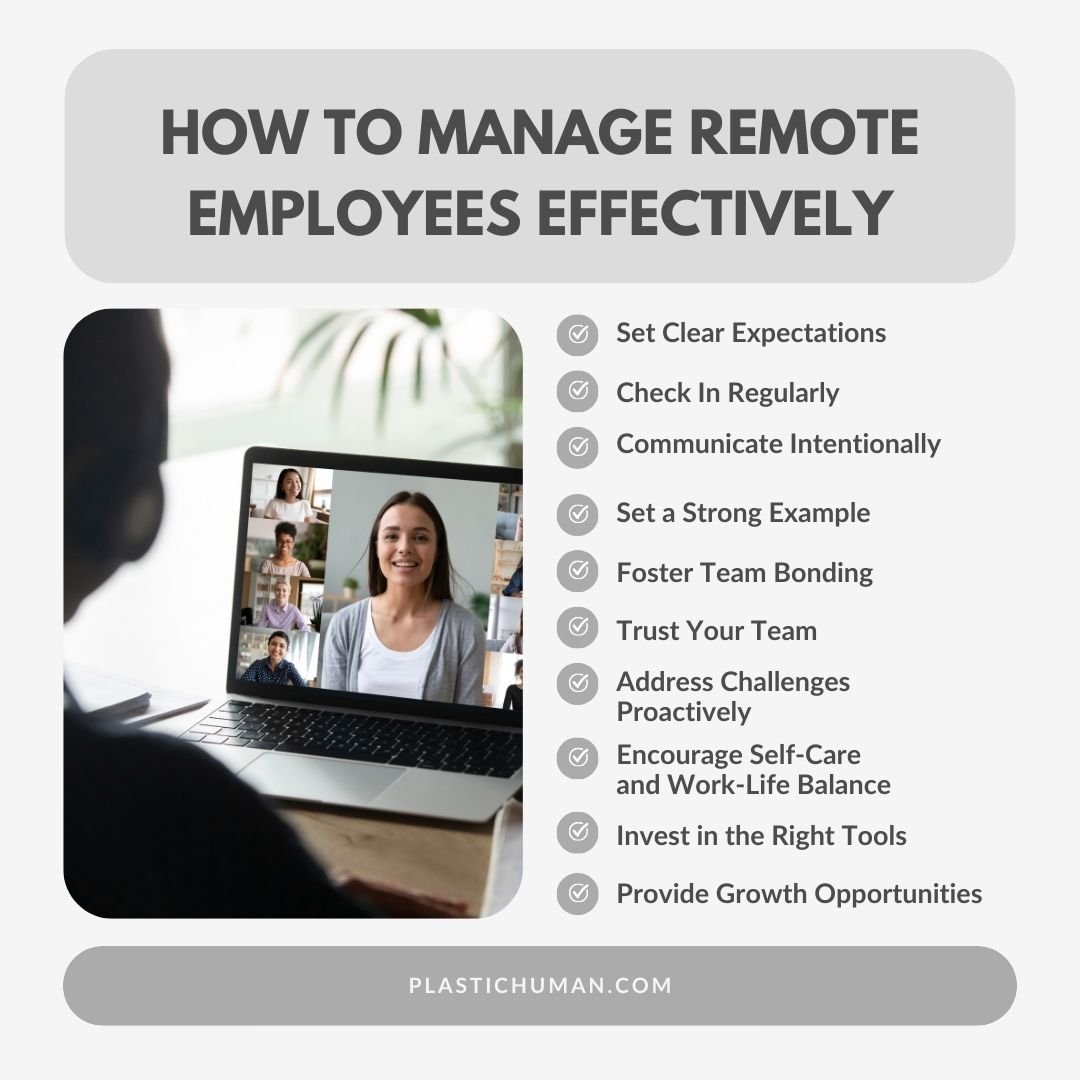
How To Manage Remote Employees Effectively
We’ve discussed the challenges managers face when managing remote teams. Now, it’s time to equip you with the tools to overcome them.
Set Clear Expectations
The last thing you want as a manager is to be vague with your team, especially when in a remote setting. Clarity in the job description and expectations from the get-go are very important.
Here’s how to do this:
- Ensure all team members know what is expected of them and their respective deadlines.
- Set measurable goals and key performance indicators (KPIs).
- Craft a shared document outlining team norms, communication protocols, and working hours.
- Revisit and adjust these expectations as needed periodically.
Check In Regularly
Out of sight does not have to mean out of mind. Regular check-ins are important to stay connected and ensure everyone’s on the right track. Don’t confuse these check-ins with micromanagement, either. Rather, it’s about showing your team you’re there for them, come rain or shine.
To do this:
- Schedule one-on-one video calls with each remote team member at least once a week.
- Organize short, daily team stand-up meetings.
- Maximize project management tools to track progress and pinpoint areas of concern.
Communicate Intentionally
When in a remote setting, there’s nothing like overdoing it when it comes to communicating. However, quality and intentionality matter a lot. You can’t just go around posting random slack messages! Instead…
Here’s how to do this:
- Choose the proper communication channel for the message (e.g., email for detailed instructions, chat for urgent questions).
- Avoid using long and complex messages that can be misunderstood.
- Use video calls for complex discussions or sensitive topics.
- Encourage open dialogue and create spaces for casual conversation.
Set a Strong Example
In this line of work, you’re not only supervising your team. In a way, you’re also setting the tone for the entire remote work culture. Therefore, it’s important to be exactly who you want your team to be. Show them how it’s done, and they’ll follow suit.
Here’s how:
- Demonstrate a healthy work-life balance by respecting working hours.
- Be open and admit when you’re facing challenges.
- Endorse and actively use remote work technologies.
- Be responsive and available during the agreed-upon hours.
Foster Team Bonding
Sharing a physical space is not a must-have criterion for team building or fostering a strong team spirit. Your team can easily build connections and be united from their different home offices.
Below are ways to turn a group of individuals into a cohesive unit that supports and motivates each other:
- Schedule virtual team-building games (quizzes, virtual escape rooms, etc.).
- Create a dedicated chat channel for non-work conversations.
- Celebrate milestones and accomplishments publicly.
- If possible, arrange occasional in-person group get-togethers.
Trust Your Team
Trust is a crucial factor in any team that desires success. It’s even more important when most or all the work is done remotely. By showing your team that you trust them, you are extending an olive branch. You’re basically empowering them to take ownership of their work and deliver their best results.
Here’s how to show your team you trust them:
- Concentrate on the results achieved rather than work hours.
- Do not try to micromanage them or use spy-monitoring tools.
- Encourage autonomy and independent problem-solving.
- Recognize and reward good work publicly to motivate others.
Address Challenges Proactively
Common and unique challenges are bound to show up with remote work. Be proactive in addressing these challenges or correcting mistakes before they turn into bigger problems.
Here’s how to be proactive:
- Periodically, ask about challenges your team may be facing.
- Develop strategies to address common issues.
- Be open to flexible solutions for individual challenges.
- Stay up-to-date on best practices in remote work.
Encourage Self-Care and Work-Life Balance
Remote work can blur the lines between professional and personal life. Sometimes, you may be so engrossed with work that you sit in front of the laptop for several hours, typing away. Leading such a sedentary lifestyle may have untoward health repercussions, which will ultimately affect productivity.
Here’s how to avoid such:
- Encourage your team to always set work hours and adhere to them.
- Instruct your workers to take regular breaks, including a proper lunch hour.
- Share resources on stress management techniques, exercising, mental healthcare, and other work-related ergonomics.
- Set the pace by ensuring you yourself commit to work-life balance.
Invest in the Right Tools
Your team is only as strong as the tools and resources at their disposal. This is even more crucial since technology is the backbone of remote work. So, make sure they’re equipped for success. When they have access to the right tools, the chances of having a productive workday suddenly increase. On the other hand, lacking the right tools is a recipe for a frustrating and unproductive day.
Provide Growth Opportunities
It’s one thing to have access to the right tools. It’s another thing entirely to know how to maximize them. Also, working remotely doesn’t mean team members’ careers have to stagnate. They should have equal opportunities for development, just like their counterparts in the physical office.
So, organize online training, courses, conferences, and virtual programs. You can also create virtual mentorship programs. Recommending great leadership books for them to read in their spare time also works. Doing all these will encourage continuous learning and development.
Managing remote employees is about bridging digital distances with human connection and fostering a thriving team culture in the virtual space.
Remote work is a dynamic sphere. Therefore, your leadership abilities should also be dynamic. Being proactive and tuning with the latest trends is how to take your leadership prowess to the next level! Looking to advance your level of remote leadership to a whole new level? Then, tune into my podcast for your daily dose of leadership wisdom!
Also, remember that good leader-managers make great remote managers. You can find out more on how to become one in my post: “Why do organizations need leader-managers?” You can also keep an eye on my blog for additional fresh insights and practical tips on remote work and SO MUCH more!
One final thing being a great leader isn’t about being perfect. It’s about learning, adapting, and always striving to bring out the best in your team, no matter where they’re logging in from. So, keep exploring, keep growing, and most importantly, keep connecting!