

Managers are key elements of every organization. They have the important task of leading the pack, keeping things running smoothly, and hopefully not driving everyone bonkers in the process.
Sure, managing a group of people is no walk in the park. Some days, it feels like you’re in an endless labyrinth, juggling between meeting deadlines, handling different personalities, and attending countless meetings. But then, that’s what the job demands. As they say, “Heavy is the head that wears the crown.” So, having a lot on your plate is no excuse to join the dark side.
We’ve all had that manager who made us dread Mondays, right? And then there’s the rare gem who actually makes work… dare I say it… enjoyable? That’s why being able to spot the difference between a good manager and a bad one is crucial for business growth!
So today, I’ll be showing you how to spot a good manager from a bad manager to make the workplace a better place!

Good Manager vs. Bad Manager: What You NEED to Know
Why are we even discussing this topic? Why does it matter in the grand scheme of things?
Well, imagine you’re job hunting. You’ve got two seemingly identical offers on the table. The pay is the same, and the benefits are similar. But there’s just one key deciding factor left: the managers. Which would you choose to work under? A manager who’ll have you whistling on your way to work or one that’ll make you regret ever shaking hands with the hiring officer?
And perhaps you’re the one in the hot seat; striving to be a good manager isn’t just about winning some “World’s Best Boss” mugs (though those are pretty cool). It’s about creating an environment where your team can thrive, where creativity flourishes, and where people actually look forward to coming to work.
But here’s the best part: being a good manager isn’t just good for your team. It’s good for you, too! Not only will being good to your team foster teamwork, which leads to better results, but you also have some personal gains to look forward to. Talk about higher job satisfaction, pride in positively impacting lives, sweet performance bonuses, and lots more.
So, wherever you belong, whether you are a manager or a hiring team member, it’s worth knowing how to spot a good or bad manager. We spend a huge chunk of our lives at work, so why not find a way to make it as conducive as possible?
Who Is A Good Manager?
Having a fancy title or the biggest office does not automatically make you a good manager. You are a good manager if you can transform your organization from being just a place of work to being a second home. Good managers make a huge difference, creating a positive work culture where people actually want to show up to work.
In such a setting, productivity soars. Why? Because people are motivated, engaged, and actually give a hoot about their work. Innovation also flourishes because team members feel safe sharing ideas without fear of being shot down.
What Makes A Good Manager?
What key qualities make a manager good, exactly? Check them out below:
- They’re good listeners, and they have excellent communication skills.
- They can read a room, understand their team’s feelings, and manage their own emotions.
- They’re flexible, embrace change, and help their team adjust.
- They own their mistakes.
- They’re always hungry for knowledge and encourage their team to keep growing too.
- They play by the rules and treat everyone equally.
- They maintain optimism even when the going gets tough.
- They’re quicker to praise than to criticize, and they make sure good work doesn’t go unnoticed.

How to Be a Good Manager:
Nobody needs a bad manager. Not the workers who turn on part-time time monitors just to get a breather, and definitely not the company as a whole, which is bound to suffer serious losses. So, how can you do a better job as a manager?
Improve Your Communication Skills
It’s better to overcommunicate than to undercommunicate. Be clear and precise on what’s expected from each individual, team goals, and any other expectations. But most importantly, listen more than you talk. Here are some tips on improving those communication skills.
Work On Your Emotional Intelligence
Learn to take control of your emotions. Start by practicing self-awareness, emotion control, and empathy. Try to see situations from your team members’ perspectives. And when conflicts do arise, approach them with a cool head. Don’t play the blame game. Instead, seek amicable resolutions. By creating habits, you make the rules.
Embrace Change
Change is the only constant thing in life. So, stay open to new ideas and be willing to pivot when necessary. Encourage your team to embrace change too. When done together as a team, embracing and thriving amidst changes becomes much easier.
Paint The Big Picture and Connect The Dots
Don’t just declare team targets and call it a day. Break down your grand plans into actionable steps. Then help your team understand how their individual roles contribute to the bigger goals.
Trust Your Team (And Show It)
Micromanagement is the fastest way to kill motivation and creativity. A good manager will delegate tasks and trust his team to deliver. Yours is to provide them with the necessary resources and support they need, then step back. When you show trust in your team’s abilities, they’re more likely to rise to the occasion.
Who Is A Bad Manager?
A bad manager is the complete opposite of everything we’ve discussed so far. Bad managers can turn a thriving workplace into a toxic one. You can also kiss productivity goodbye. After all, when people are constantly stressed, confused, or walking on eggshells, they’re not exactly operating at peak performance. Innovation takes a nosedive too, because who wants to suggest new ideas when they’re likely to be shot down or stolen?
Bad managers also drive away top talent (because life’s too short to work for a jerk). They also damage team morale. And since word gets around in professional circles, the company’s reputation may be swept through the mud.
What Makes A Bad Manager?
Recognizing the signs of bad management is the first step to addressing the problem. Here’s a list of red flags that characterize a bad manager:
- They micromanage their team, questioning every decision they make.
- They are often poor communicators, leaving their team in a constant state of confusion.
- They’re very quick to point fingers at anyone but themselves.
- They stubbornly stick to outdated methods.
- They lack empathy and care less about their team’s feelings.
- They hear you, but they’re not really listening.
- They’re allergic to constructive criticism, reacting defensively to any suggestion.
- They are indecisive and struggle when making decisions.
- They take credit for other people’s work.
- They spread office gossip, fostering a toxic work environment.
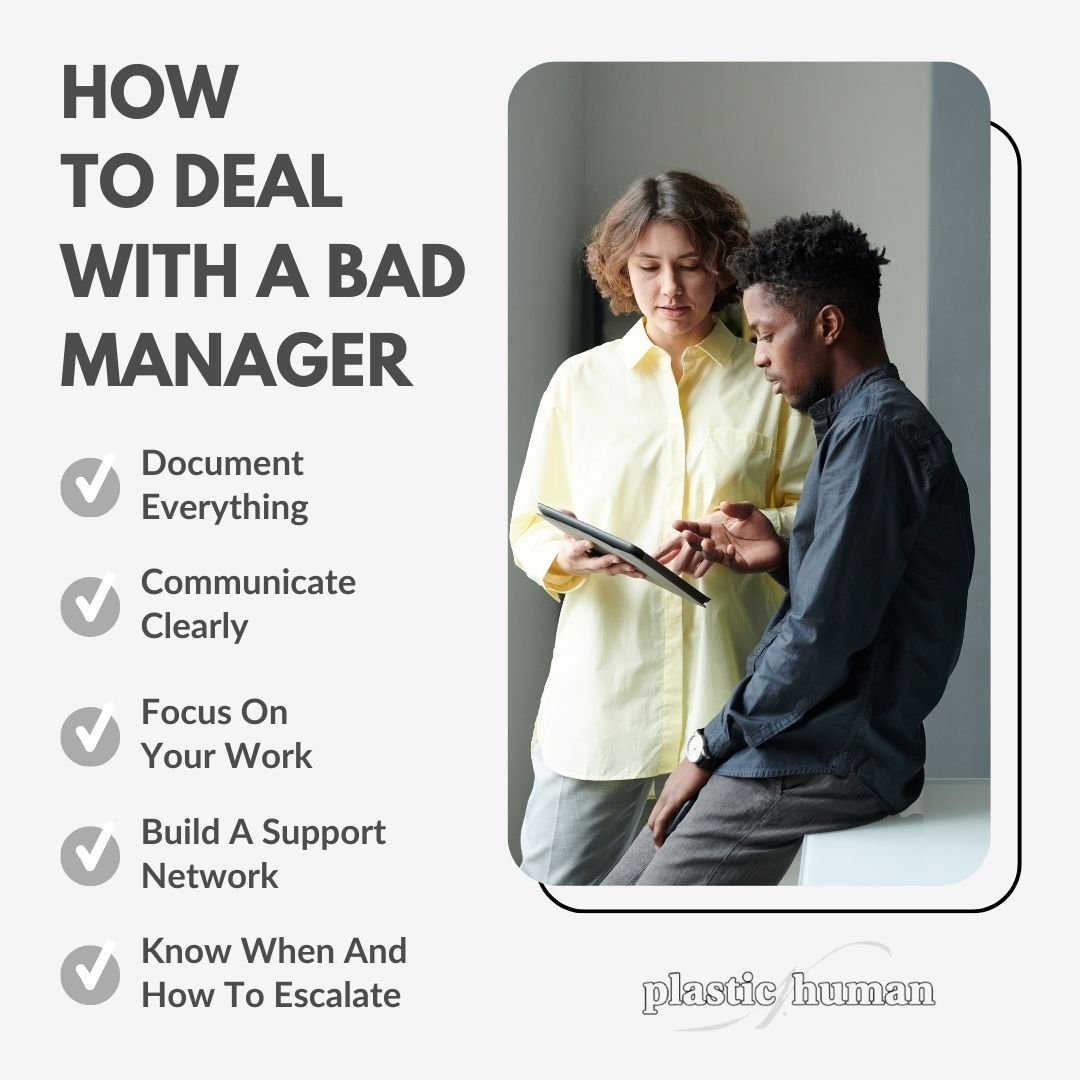
How to Deal With A Bad Manager:
Working under a bad manager is no fun. Fortunately, there are ways to get by with little to no scratch. These include the following:
Document Everything
If you’ve not been doing that before, start keeping records of anything remotely related to the manager. This includes interaction, instructions, and incidents. You are not being petty; you’re only protecting yourself, and there’s ABSOLUTELY nothing wrong with that. Those little entries will prove useful if you need to escalate issues later on.
Communicate Clearly
If they can’t communicate properly, work around their weakness and do the heavy lifting yourself. Cause if you don’t, they may put all the blame on you eventually anyway. So, confirm instructions, ask for clarification when needed, and provide regular updates on your work. Doing this will also serve as a paper trail of your efforts.
Focus On Your Work
I get it, working under a bad boss can be very frustrating. Nevertheless, resist the urge to let your frustration affect your performance. It’s like adding fuel to a fire. Instead, do your part well, even if not under supervision. Your stellar work will make it harder to be scapegoated by bad managers. It might even attract the attention of higher-ups who could be your ticket out of this ugly situation.
Build A Support Network
Chances are you are not alone in this. Some other co-workers of yours may be passing through similar ordeals. So, connect with them to find solace, provide support, and share coping strategies. Just be careful not to turn these conversations into unproductive gossip sessions.
Know When And How To Escalate
If things are really bad and affecting your work or well-being, it might be time to take your concerns up the ladder. But, don’t come forward with just word of mouth. You need solid evidence or specific examples (like the documentation part). Focus your complaints on how the manager’s behavior is impacting your work and the team’s productivity. But most importantly, be professional and solution-oriented.
The Difference Between Good Manager and Bad Manager
After all that has been said, you should be able to tell a good manager from a bad one. However, there’s one final point I’ve yet to discuss.
We’re all humans, and no man is infallible. The same applies to good managers. No matter how decent a human being they are, they are also bound to make mistakes. But, it’s times like this that the goodness in them shines brightly.
Good managers are quick to assess the situation and call themselves to action. They are also willing to heed corrections from others, consider people’s suggestions, and make good decisions.
Bad managers, on the other hand, almost never take corrections or see the errors in their ways. They’ll turn deaf ears to suggestions to fix a problem and may end up worsening things with bad, ill-informed decisions.
Great leaders aren’t born – they’re made through continuous learning and growth.
The key to being a good manager is to keep striving to be a better you and a better leader. Lead with empathy, communicate clearly, and create an environment where your team can thrive. And if you find yourself veering into bad manager territory? Well, now you know the signs and how to course-correct.
But hey, why go it alone when you’ve got a whole community of aspiring leaders out there? That’s where I come in! Tune into my podcast and check out my other blog posts for a regular dose of leadership wisdom that’ll knock your socks off.
Speaking of which, if you’re serious about leveling up your leadership skills, you MUST listen to our “Hold Space and Get Backup” episode. It’s a masterclass in servant leadership, exactly what you need to be a good manager!